
Robinhood Chain is Robinhood’s blockchain strategy for bringing traditional financial assets on-chain, starting with tokenized U.S. stocks and ETFs. Instead of keeping equities fully inside traditional brokerage rails, Robinhood is using blockchain infrastructure to support longer trading hours, broader global access, and a more crypto-native trading experience.
The narrative gained attention after Robinhood launched stock and ETF tokens for eligible European users, initially using Arbitrum infrastructure. These tokens give users exposure to major U.S. equities such as NVIDIA, Apple, and Microsoft, while Robinhood has also signaled plans to eventually develop its own blockchain for expanded 24/7 trading.
This guide explains what Robinhood Chain is, how Robinhood’s tokenized stock strategy works, why Arbitrum matters, the key risks to consider, and how investors can trade Robinhood-related market exposure on BingX TradFi.
What Is Robinhood Chain?
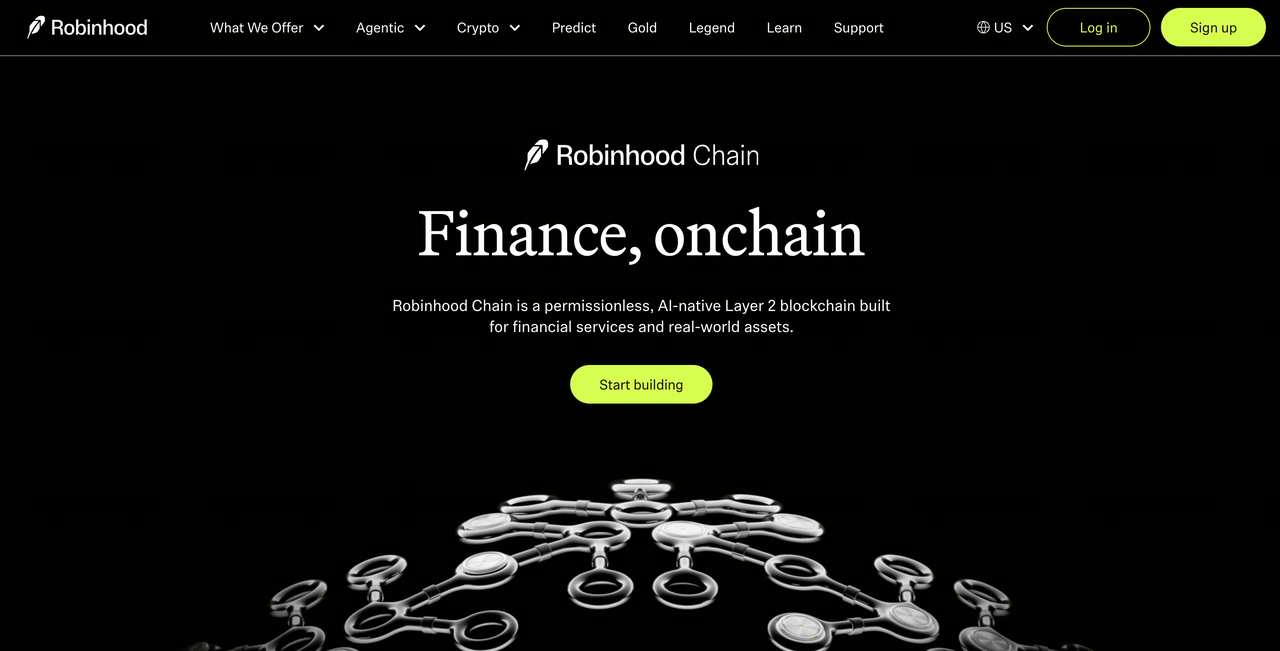
Robinhood Chain refers to Robinhood’s blockchain strategy for tokenized assets, especially tokenized stocks and ETFs. It reflects Robinhood’s broader push beyond a U.S. brokerage app toward a global financial platform that combines investing, crypto, tokenized assets, and wealth products.
At launch, Robinhood’s tokenized stock products for European users run on Arbitrum technology rather than a fully independent Robinhood-native blockchain. Robinhood has also said it plans to build its own blockchain over time to support expanded trading hours and a wider range of tokenized asset products.
This gives Robinhood Chain a different role from typical crypto Layer 1 or meme coin chains. Instead of competing with Ethereum, Solana, or BNB Chain for general DeFi activity, Robinhood Chain focuses on regulated financial products, tokenized equities, and a market structure where traditional assets can trade more like crypto assets.
Key parts of the Robinhood Chain story include:
- Tokenized stocks and ETFs: Robinhood’s first major use case is giving eligible European users access to tokenized U.S. stocks and ETFs.
- Arbitrum infrastructure: The initial stock token rollout uses Arbitrum technology, making Arbitrum an important bridge between Robinhood’s current tokenized asset product and its future blockchain ambitions.
- 24/7 trading vision: Robinhood wants tokenization to push markets beyond traditional trading hours, moving closer to crypto-style accessibility.
- RWA positioning: Robinhood Chain fits into the broader real-world asset(RWA) trend, where stocks, bonds, funds, and private-market assets are represented on-chain.
- Early meme ecosystem: Tokens like Cash Cat (CASHCAT) show how a chain narrative can quickly produce culture-driven meme assets alongside serious financial infrastructure.
How Does Robinhood Chain Work?
Robinhood Chain is best understood as a phased strategy rather than a fully mature blockchain ecosystem.
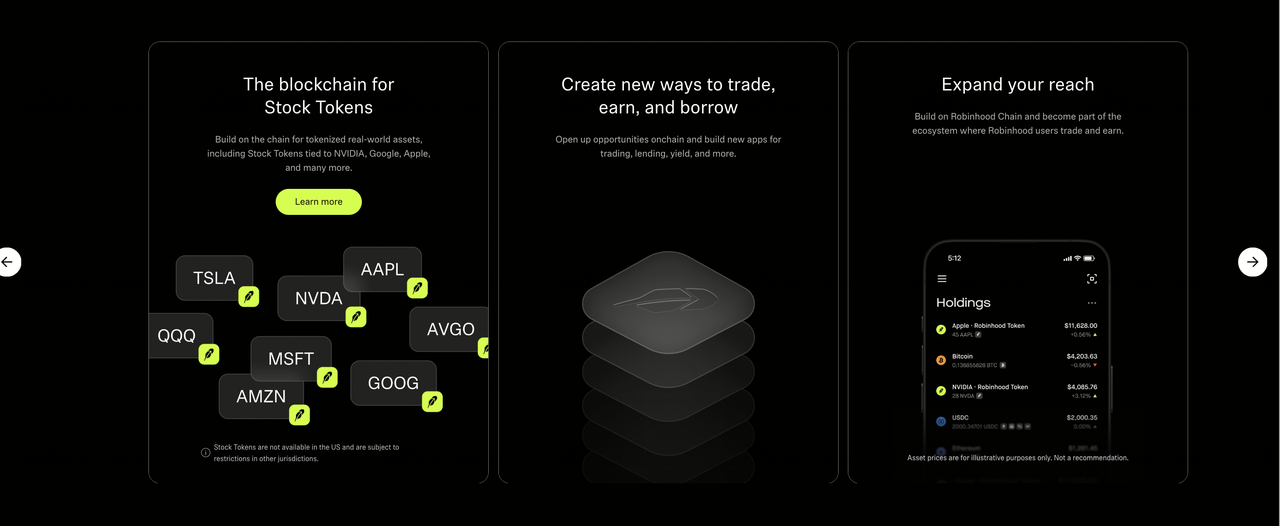
- Robinhood starts with tokenized assets: The first major step is tokenized U.S. stocks and ETFs for eligible European users. These products give users exposure to traditional equities through blockchain-based tokens.
- Arbitrum provides the initial blockchain layer: Instead of launching everything directly on a new proprietary chain from day one, Robinhood uses Arbitrum technology for its early stock token rollout. This gives the product a faster path to market while Robinhood develops its longer-term blockchain plan.
- Robinhood aims to build its own chain: The long-term goal is for Robinhood to operate its own blockchain infrastructure, which could support more tokenized assets, expanded trading hours, and deeper integration with the Robinhood app.
- Assets remain tied to compliance rules: Unlike permissionless meme coins, tokenized stocks are still financial products. Availability depends on region, regulation, custody, issuer structure, and Robinhood’s platform rules.
- A wider ecosystem can form around the chain: If Robinhood Chain gains traction, it could attract tokenized asset products, DEX liquidity, stablecoin payments, on-chain wallets, and meme coins that use the Robinhood Chain narrative.
Read More: Top 9 US Tokenized Tech Stocks to Watch in 2026
Robinhood Chain vs. Solana, Arbitrum, and Traditional Brokerages
|
Feature |
Robinhood Chain |
Arbitrum |
Solana |
Traditional Brokerage |
|
Main purpose |
Tokenized stocks, RWAs, and financial market access |
Ethereum scaling and DeFi infrastructure |
High-speed apps, DeFi, NFTs, and meme coins |
Regulated stock and ETF trading |
|
Current role |
Emerging / planned Robinhood infrastructure |
Initial tech layer for Robinhood stock tokens |
Crypto-native consumer ecosystem |
Existing brokerage access |
|
Trading vision |
More flexible and closer to 24/7 markets |
Supports scalable on-chain settlement |
Fast, low-cost crypto activity |
Limited by market hours and intermediaries |
|
Key strength |
Robinhood brand, user base, and brokerage distribution |
Ethereum ecosystem and scaling security |
Retail crypto culture and speed |
Regulatory familiarity and investor protection |
|
Key risk |
Regulatory uncertainty and early infrastructure stage |
Dependent on Ethereum and L2 competition |
Volatility and network competition |
Slower settlement and limited programmability |
Robinhood Chain’s biggest difference is distribution. Solana and Arbitrum are crypto-native ecosystems, while Robinhood already has a large retail brokerage user base and brand recognition in financial markets. If Robinhood can connect that distribution with tokenized stocks and on-chain infrastructure, Robinhood Chain could become a serious RWA gateway rather than just another blockchain.
Robinhood Chain Ecosystem in 2026: Tokenized Stocks, RWAs, and Meme Culture
Robinhood Chain’s 2026 story is built around three layers: tokenized stock access, real-world asset expansion, and early chain-native meme activity. The serious side is tokenization. The speculative side is whether traders turn Robinhood Chain into a new meme coin playground.
|
Timeline |
Key Development |
Why It Matters |
|
2025 |
Robinhood launches tokenized U.S. stocks and ETFs for eligible EU users |
Shows Robinhood’s first major step into tokenized financial markets. |
|
2025 |
Arbitrum supports the initial stock token rollout |
Gives Robinhood a scalable blockchain layer before its own chain fully develops. |
|
2025-2026 |
Private-market token exposure gains attention |
OpenAI and SpaceX-linked stock token headlines show demand for access to assets usually unavailable to retail users. |
|
2026 |
Robinhood Chain narrative expands |
Traders begin treating Robinhood Chain as a potential new RWA and meme coin ecosystem. |
|
2026 |
CASHCAT and other early meme coins appear |
Shows how cultural assets can form around the chain before the ecosystem becomes mature. |
The core of the Robinhood Chain story comes from tokenized asset distribution. Robinhood already has the consumer app, regulatory relationships, and brokerage infrastructure that many crypto-native RWA projects still need to build. If Robinhood Chain becomes the settlement layer behind tokenized stocks, ETFs, private-market exposure, and other real-world assets, it could become one of the most important bridges between TradFi and crypto.
At the same time, early meme coins like Cash Cat show how quickly culture can form around a new chain. That does not make every Robinhood Chain meme coin valuable. It does show that traders are already searching for early symbols, mascots, and tickers tied to the Robinhood Chain narrative.
What Are Robinhood Stock Tokens?
Robinhood stock tokens are blockchain-based tokens that give eligible users exposure to stocks or ETFs. Instead of buying a traditional share directly through a U.S. brokerage account, users hold a tokenized product linked to the value of the underlying asset.
For European users, Robinhood’s tokenized stock product is designed to offer broader access to U.S. equities with extended trading availability. The product began with more than 200 U.S. stocks and ETFs, including major technology names, and Robinhood has signaled plans to expand the offering over time.
However, stock tokens are not the same as holding standard shares in every legal or operational sense. Rights, custody, liquidity, trading hours, transferability, and investor protections depend on the product structure and local regulation. This is why tokenized stocks can be powerful, but also more complex than normal spot crypto trading.
Does Robinhood Chain Have a Token?
As of now, there is no confirmed official Robinhood Chain native token from Robinhood. Users should be careful with any token claiming to be the official Robinhood Chain token unless Robinhood confirms it through official channels.
Meme coins such as Cash Cat (CASHCAT) may use Robinhood Chain culture or branding themes, but they are not the same as an official Robinhood-issued token. CASHCAT’s own website says it is not affiliated with Robinhood Markets, Inc. or the Robinhood founder Vlad Tenev.
Read More: What Is Vladimir Tenev’s Net Worth in 2026?
|
Asset Type |
What It Means |
|
Robinhood stock tokens |
Tokenized products offered through Robinhood for eligible users |
|
Robinhood Chain |
Robinhood’s blockchain infrastructure strategy for tokenized assets |
|
Robinhood Chain meme coins |
Community-created tokens using the chain narrative |
|
Official Robinhood token |
Not confirmed as of now |
How to Trade Robinhood (HOOD) on BingX
Leveraging BingX AI analysis, traders can now integrate real-time sentiment shifts and institutional flow data to navigate Robinhood’s 2026 volatility.
1. Long or Short HOOD Stock Futures with USDT on BingX TradFi
Trading HOOD on BingX TradFi allows you to capitalize on both upward momentum and downward corrections using your USDT balance as collateral, bypassing traditional brokerage hurdles.
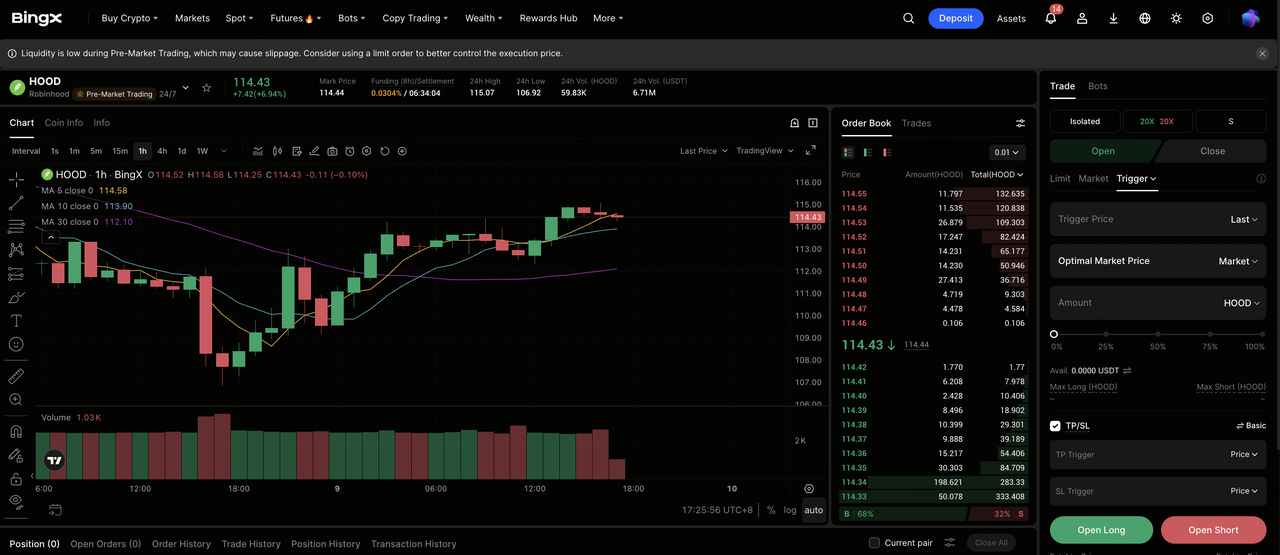
- Select Your Instrument: Navigate to the Markets and TradFi section and select HOOD/USDT perpetuals.
- Monitor the Gold Delta: Use BingX AI to track Robinhood’s monthly operating data; a surge toward 5 million Gold subscribers often acts as a leading indicator for a bullish breakout.
- Manage Leverage: Given HOOD's 5–8% daily swings in 2026, professional traders typically utilize 3x–5x leverage to maintain a safety buffer against intraday flash wipes.
- Set Gap-Resistant Orders: Because equity markets close on weekends, always utilize a Guaranteed Stop-Loss to protect your collateral from sudden Monday morning gap downs caused by weekend geopolitical or regulatory news.
2. Buy, Sell, or HODL Robinhood Tokenized Stocks HOODx and HOODON on BingX Spot
For investors who prefer 24/7 liquidity and the benefits of blockchain, tokenized versions of Robinhood stock offer a flexible alternative to traditional equity markets.
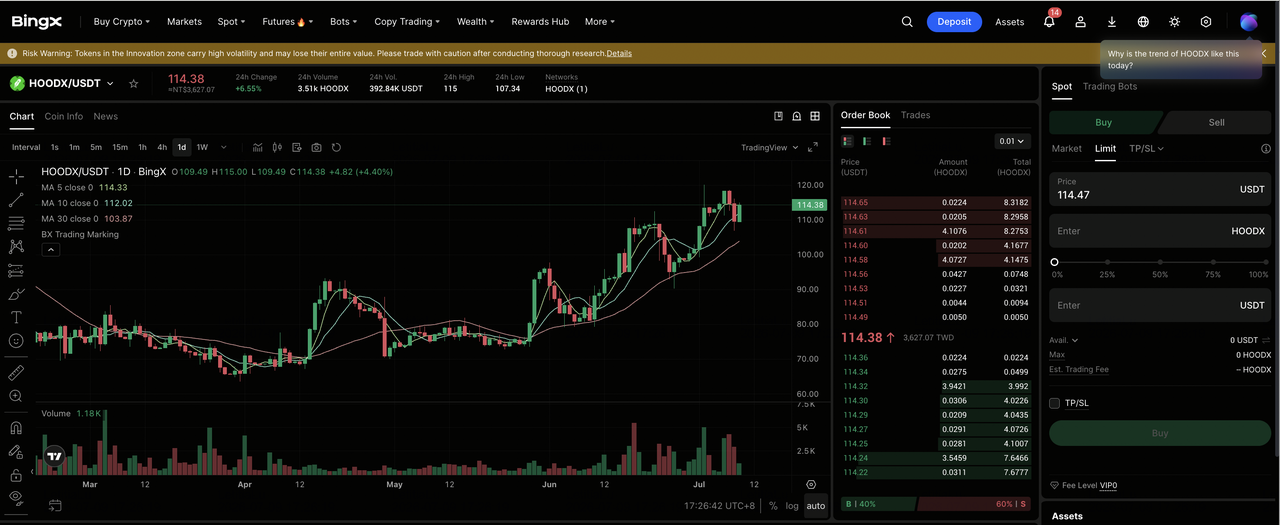
- Choose Your Asset Type: Select HOODx for a 1:1 backed digital twin of the stock for fractional ownership, or choose HOODON if you want to capture the price action while earning brokerage sweep yields.
- Fund Your Spot Wallet: Ensure your BingX Spot account is funded with USDT. Since tokenized stocks are not bound by NYSE trading hours, you can execute trades 24/7, even when Wall Street is closed.
- Execute Your Trade: Navigate to the Spot Market, search for your chosen trading pair HOODX/USDT or HOODON/USDT, and use Limit Orders to enter your position. This is particularly useful for front-running expected price action before the traditional market opens on Monday morning.
- HODL or Utilize in DeFi: Once purchased, you can hold (HODL) your tokens to benefit from Robinhood's long-term growth. Unlike traditional shares, these tokens can often be transferred to your DeFi wallet or used as collateral for on-chain lending on the BingX ecosystem.
- Monitor On-Chain Sentiment Use BingX AI to track the Mint/Burn ratio of these tokens. An increase in HOODx minting typically signals institutional-level capital moving on-chain, providing a high-conviction signal for spot traders.
Risks and Considerations Before Using Robinhood Chain or Trading Its Ecosystem
Robinhood Chain is one of the more important tokenization narratives, but it also carries serious risks.
- Regulatory uncertainty: Tokenized stocks and private-market tokens are still legally complex, especially across the U.S., EU, and other jurisdictions.
- Stock tokens are not always the same as shares: Users need to understand the legal rights, custody structure, and redemption mechanics behind each tokenized product.
- Robinhood Chain is still early: The long-term proprietary blockchain strategy is not as mature as established networks like Ethereum, Solana, or Arbitrum.
- Meme coin risk is extreme: Robinhood Chain meme coins can be highly volatile and may have no official relationship with Robinhood.
- Brand confusion risk: Tokens using Robinhood-related language may confuse users into thinking they are official products. Users should verify every source, contract, and disclaimer.
- Liquidity and bridge risk: If users interact with Robinhood Chain meme tokens or DEXs, liquidity depth, bridge safety, and wallet support become important risks.
Final Thoughts: Why Robinhood Chain Matters in 2026
Robinhood Chain matters because it sits at the intersection of three major trends: tokenized stocks, real-world assets, and retail-friendly crypto access. Unlike many RWA projects that need to build distribution from scratch, Robinhood already has a powerful consumer brand and a large base of retail investors.
The key question is whether Robinhood can turn tokenized equities from a headline product into a durable market structure. If the company expands from 200 stock and ETF tokens into thousands of assets, improves trading hours, and builds its own blockchain infrastructure, Robinhood Chain could become one of the most important TradFi-to-crypto bridges.
For crypto traders, the chain also creates a new narrative layer. Meme coins like CASHCAT show that culture appears quickly wherever liquidity and attention gather. But the real Robinhood Chain story is bigger than meme coins: it is about whether tokenization can make global markets more accessible, programmable, and closer to 24/7 trading.
Related Reading
- What Is Vladimir Tenev’s Net Worth in 2026?
- What Is Bonk (BONK)? A Beginner's Guide to Solana's Meme Coin and BONK Ecosystem in 2026
- What Is Cash Cat (CASHCAT)? A Beginner’s Guide to the Robinhood Chain Meme Coin in 2026
- Robinhood Stock Forecast 2026: $130 Hyper-Growth or Valuation Correction?
- What are Robinhood Tokenized Stocks HOODX (xStocks) and HOODON (Ondo) and How to Buy?
FAQs About Robinhood Chain
1. Is Robinhood Chain live?
Robinhood has launched tokenized stock products for eligible European users using Arbitrum technology and has signaled plans to eventually build its own blockchain. The full Robinhood Chain ecosystem is still early compared with mature public chains.
2. Is Robinhood Chain the same as Arbitrum?
No. Robinhood’s initial tokenized stock rollout uses Arbitrum technology, but Robinhood has also discussed building its own blockchain infrastructure over time.
3. Does Robinhood Chain have an official token?
No official Robinhood Chain native token has been confirmed. Users should be cautious with any token claiming to be official unless Robinhood announces it directly.
4. What are Robinhood stock tokens?
Robinhood stock tokens are blockchain-based products that give eligible users exposure to stocks or ETFs. They are not the same as ordinary crypto meme coins, and their legal structure depends on the product and jurisdiction.
5. Are Robinhood Chain meme coins official Robinhood products?
No. Meme coins using Robinhood Chain narratives, such as CASHCAT, are community-created speculative tokens unless Robinhood states otherwise.
