
The global capital markets in mid-2026 are closely monitoring the digital asset fund ecosystem as the lines between traditional legacy equity brokerages and decentralized crypto networks permanently dissolve. ProShares Bitcoin Strategy ETF (NYSE: BITO) serves as a primary vehicle for global investors aiming to capture this massive secular shift toward institutional cryptocurrency exposure. By anchoring its core portfolio operations in cash settled, short term regulated derivative contracts rather than direct token ownership, the retail focused investment vehicle presents a unique tactical allocation for the current macroeconomic climate.
As alternative asset platforms scale their product frameworks to compete directly with direct digital asset custody options, fund operators are managing their roll mechanisms to protect net investor yields. Wall Street analysts indicate that the traditional tracking parameters for derivative backed index funds are undergoing a thorough re rating throughout the second half of 2026. For international traders monitoring secular shifts in decentralized infrastructure and equity market settlement rails, tracking the performance metrics of the fund has become a core strategic imperative.
Read more: What Is Bitcoin Dominance (BTC.D) and How to Use It for Smarter Crypto Trading?
Top 5 Things for BITO Investors to Know in 2026
- The Regulated Futures Infrastructure Moat: Operating under the rigid protections of the Investment Company Act of 1940, the fund allows institutional accounts to navigate digital asset fluctuations. This structural model shields traditional portfolios from the custodial challenges, wallet exploits, and private key security risks linked to direct token storage.
- The Contango Roll Friction Drag: Because the pool focuses on futures contracts rather than physical tokens, managers must consistently replace expiring positions with further out months. When forward contracts trade higher than spot values, this rolling sequence triggers structural decay that weighs on multi year holding returns.
- Liquidity Optimization Engines: Clearing across major regulated exchanges like the NYSE Arca, the vehicle offers massive volume profiles and deep liquidity reserves. This setup enables large institutional desks to deploy swift, high volume asset shifts without causing the execution slippage common on Spot platforms.
- Active Income Distribution Design: Capitalizing on volatile swings in the crypto market, the vehicle creates frequent yield opportunities. Through cash settle strategies, option premium trades, and short term interest income, the fund manages a regular monthly payout program designed for yield focused investors.
- Direct Equity Multi-Account Integration: By translating underlying crypto price movements directly into a standard stock ticker, the setup eliminates the need for specialized external digital currency accounts. This allows users to hold asset exposure within standard retirement wrappers, tax sheltered corporate vehicles, and conventional margin accounts.
What Is ProShares Bitcoin Strategy ETF (NYSE: BITO)?
Source: Google
ProShares Bitcoin Strategy ETF is an American exchange traded fund and structured digital asset vehicle that operates the largest futures backed cryptocurrency investment platform in global equity markets. Launched on October 19, 2021, by ProShares, a prominent domestic provider of specialized and alternative exchange traded funds, the entity disrupted traditional asset markets by becoming the first ever U.S. exchange traded fund tracking Bitcoin futures contracts to receive formal regulatory clearance from the SEC.
Today, the asset ecosystem operates as a highly liquid financial gateway across three distinct focus disciplines:
- Derivatives Exposure Management: The fund holds front month and near term CME Bitcoin Futures contracts, keeping its asset base tied directly to the institutional synthetic pricing index monitored by global clearing agencies.
- Traditional Brokerage Integration: The retail facing asset pool allows checking, individual retirement accounts (IRAs), and classic corporate portfolios to maintain direct digital finance exposure without ever using localized crypto exchanges.
- Structured Income Potential: Rather than hoarding long term tokens, the framework utilizes an active monthly distribution model. It isolates cash distributions derived from underlying futures market anomalies, rolling contracts, and short term yield reserves.
With its prominent position as a pioneer in digital finance products, the fund has built massive market presence. In 2026, it operates as a deeply integrated investment vehicle where standard equity brokerages and public blockchain asset indices function side by side.
Read more: IREN Limited (IREN) Stock Outlook 2026: Can Bitcoin Mining and AI Cloud Expansion Drive IREN Higher?
2026 Tech Sector Investment Comparison
The table below contrasts the financial parameters, underlying attributes, and structural tailwinds defining the prime crypto futures, spot coin vehicles, and broad tech software channels in the 2026 market cycle.
|
Asset Class / Strategy |
Implied Focus Sector |
Primary Revenue Driver |
Primary Growth Tailwinds |
Structural Risks and Roadblocks |
|
ProShares Bitcoin Strategy ETF |
Regulated Crypto Derivatives and Futures Indexes |
Front-Month Futures Spreads and Short-Term Yield Pools |
Broad institutional adoption of retirement crypto rails; structural volatility premium spikes. |
Vulnerable to structural contango decay friction; high baseline annual fund expense ratio. |
|
Spot Bitcoin Investment Frameworks |
Direct Digital Currency Asset Custody |
Direct Spot Crypto Token Appreciation |
Growing global network adoption; expansion of peer-to-peer on-chain utility systems. |
Exposure to single-point exchange platform vulnerabilities; lack of regulated yield options. |
|
iShares Expanded Tech-Software ETF (IGV) |
Enterprise Application and Cloud Systems Software |
Pure-Play Software Licensing Contracts |
Rapid deployment of enterprise software; predictable recurring SaaS revenue. |
High dependency on compute pricing; zero defense against stock multiple compression shocks. |
BITO Core Details and Key Stock Metrics
- Primary Exchange Position: NYSE Arca / Top-Tier Digital Asset Derivative Segment
- Inception Date: Launched October 18, 2021 (First ever U.S. regulated crypto futures ETF)
- Fund Management House: Managed actively by ProShares Advisors LLC
- Global Headquarters Location: Bethesda, Maryland, United States
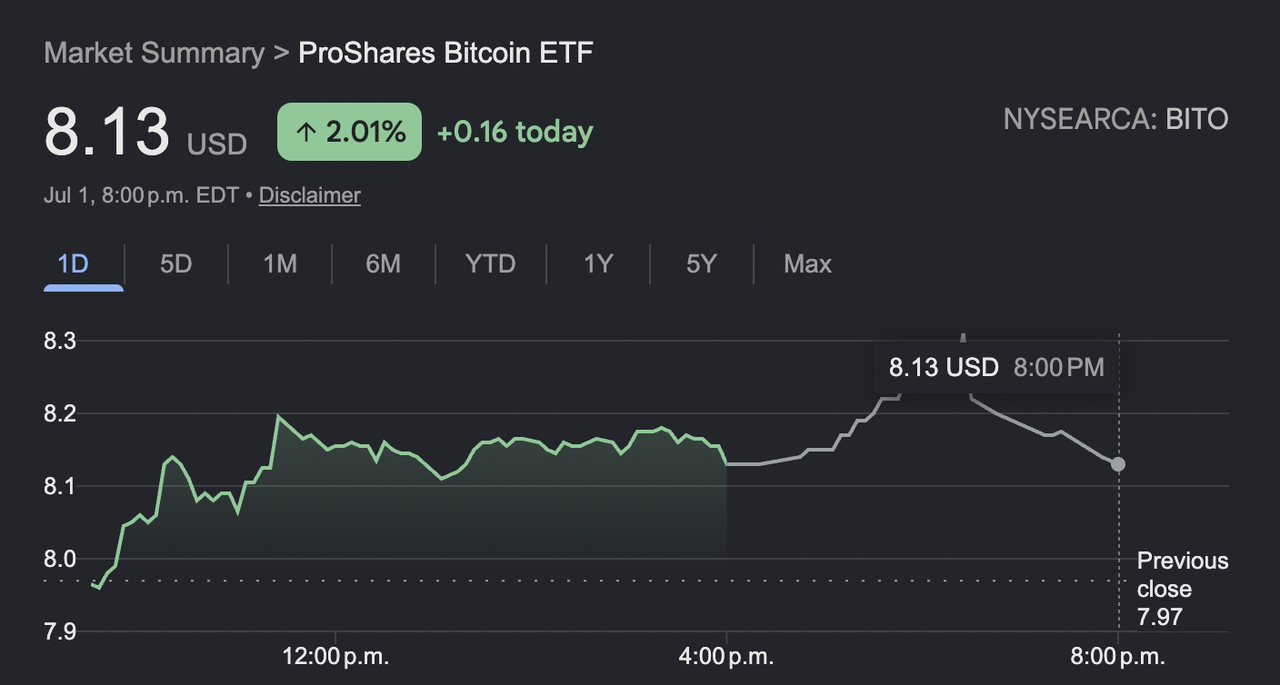
- Current Market Price: As of the July 1, 2026 market close, the stock finished trading at a market valuation reflecting an asset price of $8.13.
Key Financial and Operating Metrics Table
The fundamental data tracking the fund's asset allocation growth highlights the framework's scale heading into the second half of the 2026 fiscal year:
|
Financial and Operating Metric Category |
2026 Stated Value Status |
|
Current Stock Price |
$8.13 |
|
Estimated Total Managed Assets (AUM) |
Approx. $1.70 Billion |
|
52-Week Trading Range |
$7.87 to $23.49 |
|
Net Fund Management Cost (Expense Ratio) |
0.95% |
|
Stated Underlying Shares Outstanding |
Approx. 169.53 Million Shares |
|
Primary Holdings Concentration Index |
Approx. 97.90% Front-Month CME Futures |
|
Trailing Dividend Yield Metrics |
Approx. 2.12% Stated Forward Yield Range |
|
Average 10-Day Trading Volume Profile |
Approx. 244.10 Million Shares |
|
Stated Net Asset Value (NAV) Base |
Approx. $7.97 |
Recent BITO Corporate Developments and Strategy
Source: BITO
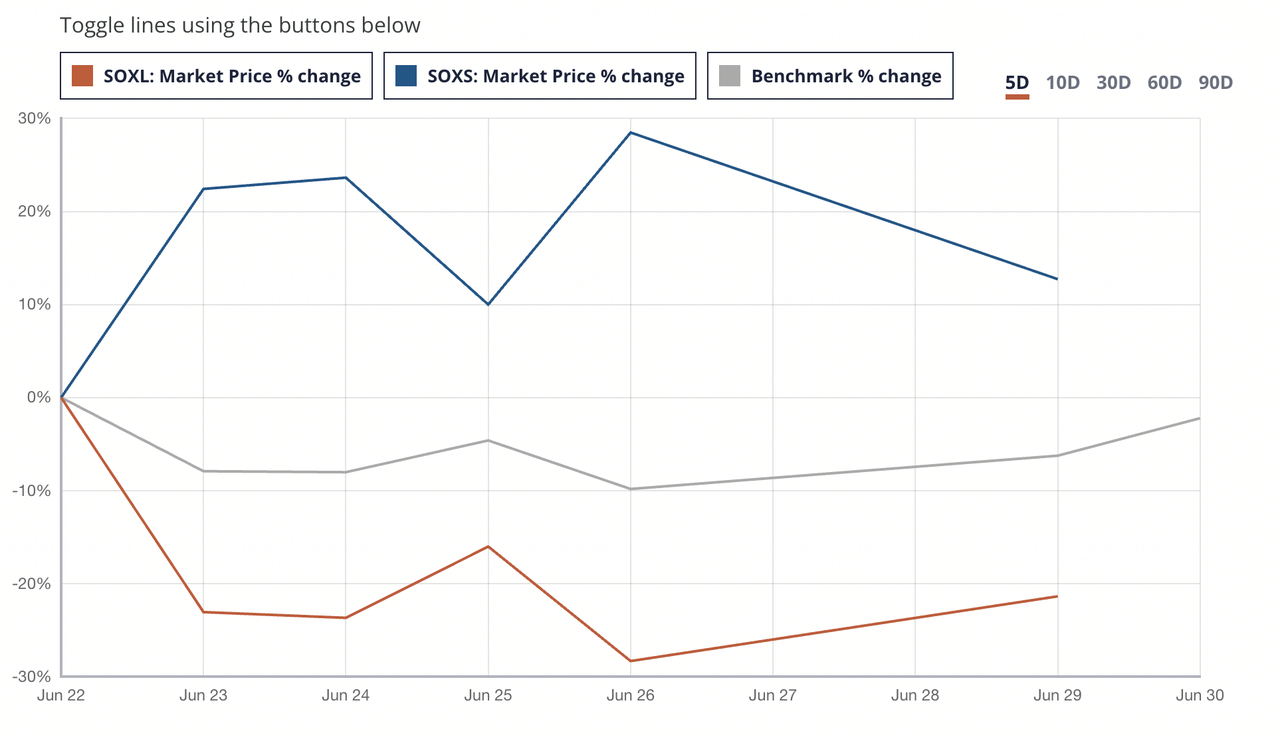
Rather than relying purely on simple, long term spot token storage models, the fund's mid-2026 layout focuses on institutional yield maximization and clearing house efficiencies.
1. Multi-Brokerage Margin Collateralization Updates
In a milestone partnership for the digital asset fund sector, the platform finalized clearing rules allowing its shares to serve as tier one margin collateral across major domestic clearing houses. This integration enables global institutional traders to optimize complex cross asset derivative strategies and hedge short positions without liquidating their fundamental equity accounts.
2. Integration of Extended-Duration Contract Swaps
Moving past short term front month positions, the fund refined its rolling framework to utilize blended multi duration contract swaps. This structural modification aims to insulate the product portfolio from acute near term expiration pressure, lowering tracking deviations and stabilizing core performance relative to underlying digital tokens.
Read more: How to Trade Forex, Commodities, Stocks, and Indices With BingX TradFi: A Beginner's Guide (2026)
The Investment Thesis for 2026: 5 Pillars of Market Valuation
Source: OptionsCharts
1. The Regulated Exchange Protection Moat
With its structural design matching all SEC Investment Company Act standards, the pool provides a highly secure investment environment. This protection isolates corporate portfolios from sudden counterparty failures and legal complications often found with unbacked off shore token platforms.
2. High-Velocity Volatility Capture Tools
Operating with high average volume profiles, the vehicle serves as a core tactical asset. This enables derivative traders to capture rapid, intra-day premium shifts and short term swings in the crypto market with minimal market impact.
3. Integrated Retirement Account Inflows
The product provides a direct channel for institutional retirement capital to enter the digital asset market. By functioning inside standard retail 401k wrappers and traditional IRAs, it taps into steady asset inflows that remain unavailable to direct on chain wallets.
4. Transparent Options Premium Liquidity
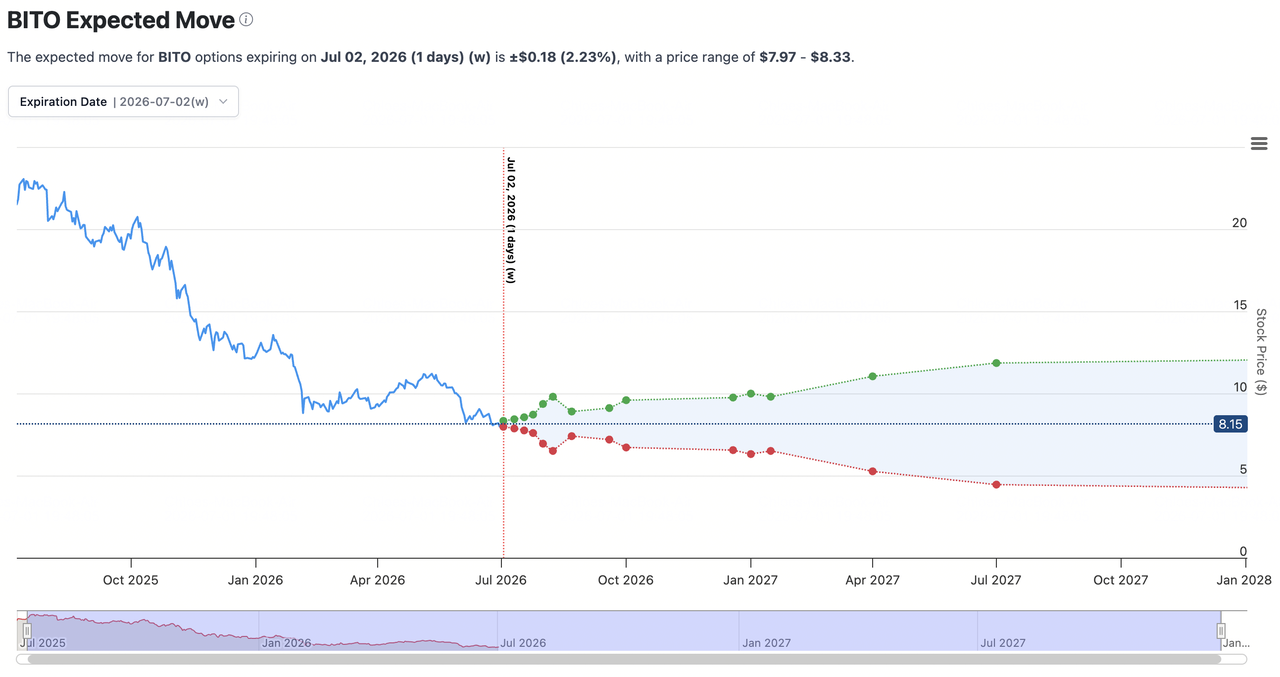
The asset underpins an active, liquid options ecosystem. This deep market allows income focused traders to construct advanced risk mitigation models, covered call overlays, and defined spread systems to generate consistent premium returns regardless of general market directions.
5. Seamless Multi-Asset Portfolio Balancing
The fund simplifies asset allocation by letting institutional desks adjust their cryptocurrency exposure through traditional portfolio management software. This eliminates the operational costs, customized accounting infrastructure, and security steps required to handle actual digital tokens.
BITO ETF Valuation and Performance Forecasts for 2026: Bull vs. Bear Outlook
Institutional research desks maintain an active dialog regarding the fund's trajectory, balancing its derivative driven convenience against its ongoing rolling costs.
|
Institution / Analyst Desk |
2026 Target Valuation Range |
Market Outlook / Stance |
|
Canaccord Genuity Digital Assets |
$18.00 |
Highly Bullish: Driven by fast institutional adoption of retirement account crypto rails and significant volatility spikes. |
|
H.C. Wainwright Co. |
$16 |
Bullish: Supported by the premium scalability of high-volume futures markets and optimized multi-contract rolls. |
|
Needham and Company |
$12 |
Moderate Bull: Expects steady near-term trading activity supported by robust multi-brokerage collateral upgrades. |
|
Compass Point Research |
$9 |
Neutral / Market Perform: Constructive on near-term liquidity profiles, but cautious on long-term capital drag from high expense ratios. |
|
JPMorgan Equity Strategy |
$8 |
Neutral / Hold: Expects steady transactional liquidity, but notes persistent margin pressure from direct spot ETF competition. |
|
Barclays Capital |
$7 |
Hold: Cautious stance keeping targets near historical lows due to structural contango friction and short-term downward indicators. |
|
Stifel Nicolaus Research |
$5 |
Underweight: Concerned about structural roll-cost decay during sideways trends and active macro interest rate headwinds. |
The Bull Case: Volatility Spikes Power High-Yield Distributions
Bulls argue that as market volatility increases, the fund's strategy will capture elevated options premiums and futures arbitrage spreads. This shift toward higher monthly payout potential would attract yield focused income accounts, driving strong capital inflows and raising the fund's valuation well above its baseline asset targets.
The Bear Case: Persistent Contango Decay and Fee Compression
Bears note that holding derivative positions instead of physical spot assets creates an ongoing cost disadvantage. If the market stays range bound, continuous roll costs combined with the 0.95% expense ratio could lead to long term performance drag, keeping the fund's valuation tied to lower derivative pricing tiers.
Competitive Risks and Sector Pressures
While the vehicle benefits from high liquidity and broad traditional brokerage access, its management team must carefully navigate several structural headwinds:
- Sustained Contango Contract Friction: Operating within active futures markets exposes the fund to ongoing roll costs. When farther out contracts remain consistently more expensive than expiring positions, this negative roll yield chips away at long term net asset value.
- Direct Competition From Low-Fee Spot ETFs: The availability of spot bitcoin ETFs offering lower expense structures presents a competitive challenge. If long term institutional investors opt for direct asset tracking vehicles with lower fees, futures backed pools could face capital outflows.
- Macro Interest Rate and Volatility Shifts: As a derivative backed product, the fund's internal cash balances are highly sensitive to central bank policy shifts. Sudden drops in broader interest rates or long periods of low volatility can compress the fund's baseline return streams.
How to Trade ProShares Bitcoin Strategy ETF (BITO) on BingX
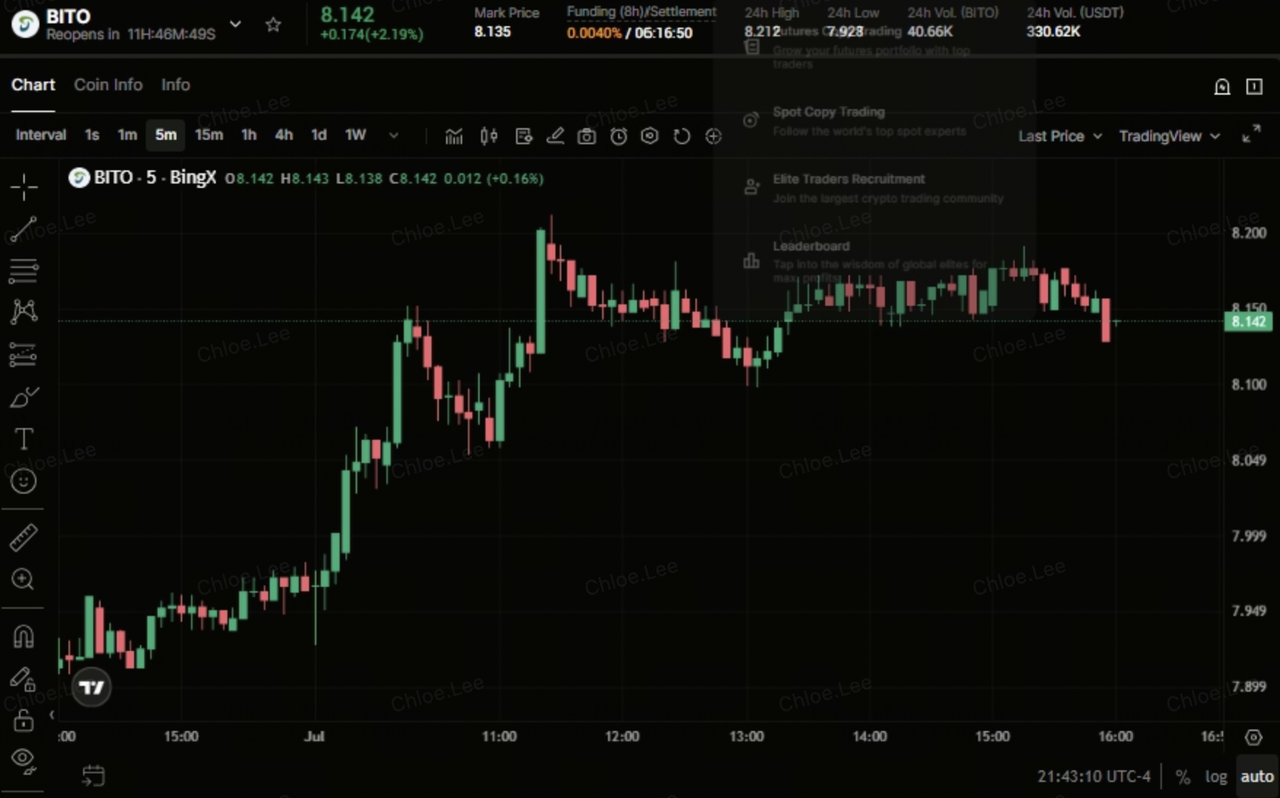
For global market participants looking to take advantage of the volatility surrounding digital asset cycles and futures rollover periods, trading derivative contracts offers a highly flexible, capital efficient alternative to traditional share ownership. This vehicle allows active traders to manage risk or target short term price movements around major fund distribution milestones, much like how tech investors track updates across traditional finance (TradFi), semiconductor leaders like NVIDIA, or core digital assets like Bitcoin.
- Go to the BingX TradFi section and select Stock Futures.
- Search for the BITO/T perpetual contract.
- Check the trading session before placing your order. Liquidity is typically lower during extended sessions, which can result in wider spreads and higher volatility.
- Select your Margin Mode (Isolated or Cross) and set your leverage.
- Choose Open Long if you expect momentum, strong chip architecture updates, or positive analog cycle inventory recovery. Choose Open Short if you anticipate margin pressures from heavy CapEx spending, factory execution delays, or valuation pullbacks.
- Set Take-Profit (TP) and Stop-Loss (SL) levels immediately to manage risk against BITO's price swings driven by earnings, news, or global semiconductor production milestones.
Conclusion: Navigating the Derivatives Frontier
The digital asset fund sector in 2026 is moving through a major evolution. The investment products positioned for sustainable utility are those that successfully merge traditional equity accounts with modern alternative market tools. The strategic positioning of this fund as a fully regulated futures vehicle, complete with deep institutional options liquidity and wide margin collateral configurations, demonstrates a clear tactical role.
While investors must monitor ongoing roll costs and changing fund management landscapes, the structural convenience of its brokerage model and active distribution capabilities continue to support the fund's market presence. For short term derivatives traders and tactical asset allocators alike, tracking the vehicle provides a direct way to participate in the future of alternative finance as institutional wrappers and modern trading terminals establish a new global standard.
Risk Reminder: Derivative and leveraged investment contracts carry high market risk. Rapid shifts in central bank interest rates, sudden adjustments to futures clearing regulations, and unexpected margin requirement updates can cause sharp capital movements. Traders should always use disciplined risk management tools, sensible position sizes, and tight stop losses across every active session.
