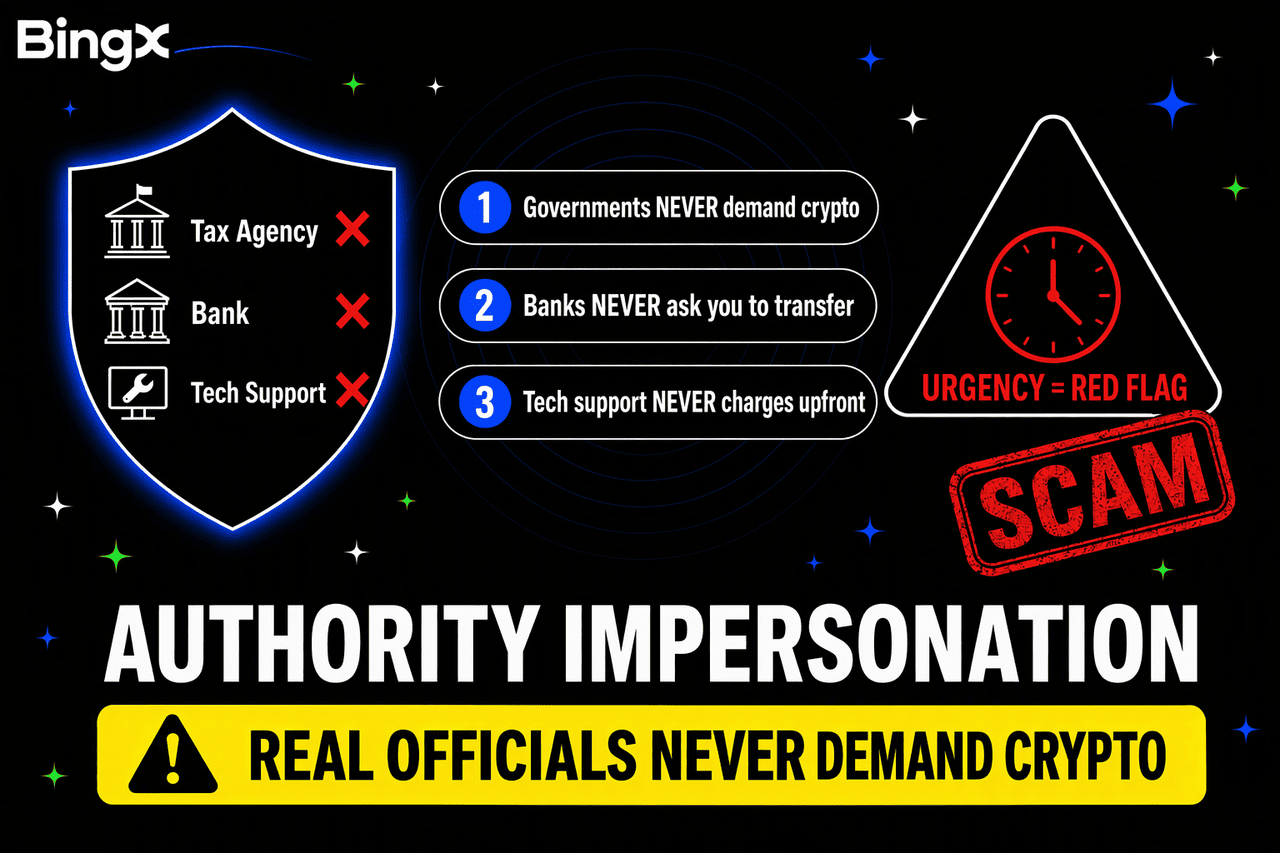
Authority impersonation scams involve fraudsters posing as government officials, bank representatives, or technical support personnel to deceive individuals into transferring cryptocurrency. These schemes typically rely on fabricated legal notices, account security warnings, or technical alerts to create urgency and obtain unauthorized payments.
Common scenarios include fraudulent tax authorities demanding cryptocurrency payments to settle alleged tax liabilities, fake bank representatives claiming an account is linked to money laundering and instructing customers to transfer funds to a designated wallet, and counterfeit technical support alerts warning of device infections while demanding payment for supposed repairs. Although the impersonated institutions differ, these schemes share the same tactics: exploiting fear, urgency, and the perceived credibility of official organizations. Cryptocurrency is particularly attractive to scammers because confirmed blockchain transactions are generally irreversible, making stolen funds difficult to recover.
Authority Impersonation Scams in Crypto: 3 Warning Signs to Watch For
Authority impersonation scams often involve familiar institutions and convincing payment demands. Three rules can help identify fraudulent requests before transferring cryptocurrency:
- Government agencies never demand cryptocurrency payments: Scammers impersonate tax authorities or law enforcement, claiming that taxes, fines, or legal penalties must be paid in crypto. Legitimate government agencies do not collect payments through personal wallet addresses or crypto ATMs.
- Banks never ask customers to transfer crypto to a "safe account": Fraudsters may claim an account is compromised or linked to money laundering, then instruct customers to move funds to an external wallet. Contact the bank using its official phone number. For anyone claiming to represent BingX, verify their identity through BingX Verify or contact support through the official app.
- Legitimate tech support never demands crypto payments through unsolicited alerts: Scammers use fake virus warnings to persuade users to install remote-access software and pay for unnecessary services. Requests combining screen sharing with cryptocurrency payments are a major warning sign.
3 Things to Check Before Trusting an Official Request
Before responding to someone claiming to represent a government agency, bank, or platform, verify their identity through independent channels:
- Use official contact information: Find the institution's website, app, or customer service number independently. Never rely on links, phone numbers, or QR codes provided by the sender. For BingX-related requests, use BingX Verify to check official websites, emails, phone numbers, and social media accounts.
- Watch for pressure tactics: Threats of arrest, account suspension, or financial losses combined with demands for immediate payment are common impersonation tactics. Take time to verify the claim before responding.
- Never transfer crypto for verification or protection: Treat requests for cryptocurrency payments to verify identity, secure accounts, or obtain refunds as suspicious. For BingX-related concerns, contact BingX Support through official channels before taking action.
Protect Your Crypto: Avoid Suspicious Links, QR Codes, and Screen Sharing
Avoid opening unexpected attachments, scanning QR codes from unfamiliar senders, or installing software at the request of someone claiming to be an official representative. Never grant remote access or screen-sharing permissions to unsolicited contacts, as these can expose sensitive information, account details, and security credentials.
Authority impersonation is one form of social engineering, alongside phishing websites and fraudulent investment opportunities. Verifying identities, checking unexpected requests, and refusing rushed payment instructions can help protect crypto assets from impersonation scams.
Risk Reminder: Crypto trading involves high volatility and the potential loss of principal, while impersonation scams can lead to permanent asset losses. This article is for security education only, not investment advice. Always verify official channels and contact BingX Support for account-related concerns.
