
Zebec Network ($ZBCN) is a leading decentralized Real-World Asset (RWA) and payment infrastructure network designed to eliminate the inefficiencies of traditional, batch-based financial systems. By moving away from the monthly paycheck model, Zebec enables money to flow second-by-second, providing employees and businesses with immediate access to liquidity.
In early 2026, Zebec reached a massive milestone by completing its final major token unlocks, transitioning the ZBCN ecosystem into a deflationary model fueled by actual protocol revenue. With over $500 million in annual payroll volume and integrations across 18+ blockchains, including Solana, Stellar, and its own Nautilus Chain, Zebec is now the foundational layer for the emerging PayFi (Payment Finance) economy.
This article examines how Zebec unifies payroll and retail spending, the mechanics of its real-time streaming protocol, the utility of the $ZBCN token, and how to trade Zebec Network (ZBCN) on BingX.
What Is Zebec Network (ZBCN)?
Zebec Network is a multi-chain financial ecosystem that acts as a bridge between Web3 liquidity and real-world commerce. While traditional finance (TradFi) relies on intermediaries and slow settlement cycles of T+2 or T+3, Zebec utilizes blockchain’s speed to power everyday activities like salaries, bill payments, and budget tracking in real-time.
The platform's core mission is to make money programmable. To achieve this, Zebec has expanded beyond a simple protocol into a comprehensive suite of products:
- Zebec Pay: A real-time payroll solution where workers can see their earnings increase in their wallets every second.
- Zebec Cards: A suite of Mastercard-powered debit cards (Silver, Carbon, and Black) that allow users to spend crypto at over 100 million merchants globally.
- ZePIN (Zebec Physical Infrastructure Network): A PoS (Point-of-Sale) system that allows physical businesses to accept stablecoin payments natively.
- Zebec Super App: A Web3-native consumer app that unifies payroll, streaming, and spending into one interface.
How Does the Zebec Ecosystem Work?
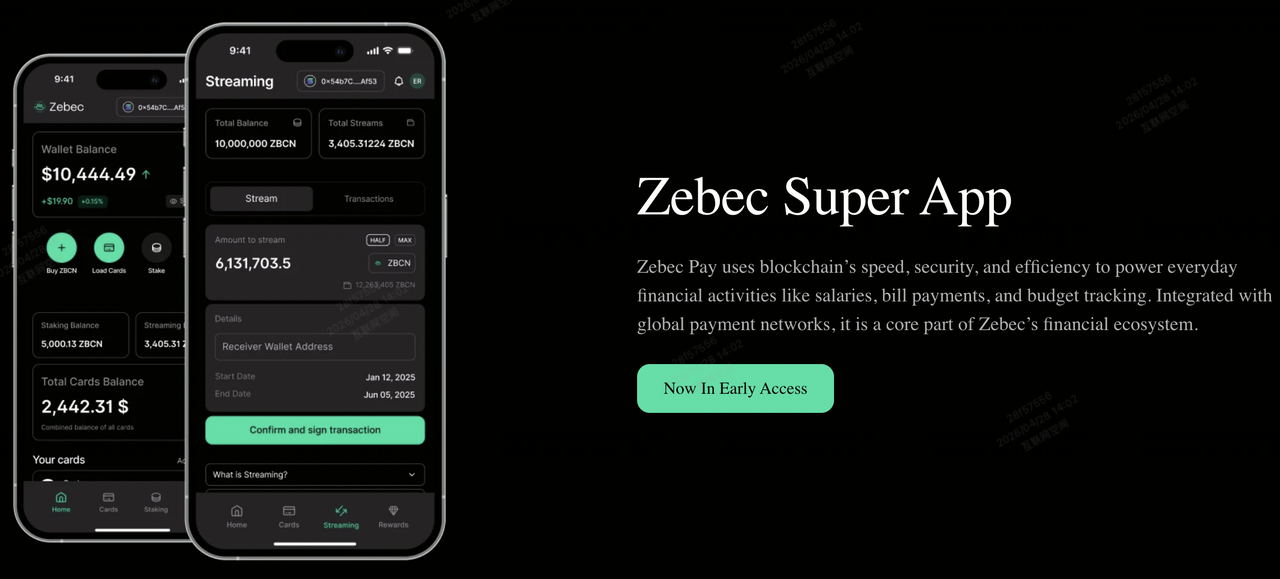
Zebec Super App
At its core, Zebec is an application and infrastructure layer that optimizes Continuous Finance:
- Continuous Settlement Protocol: Unlike a standard send transaction, Zebec uses smart contracts to create a stream. An employer deposits a lump sum into a vault, and the contract automatically releases a specific amount of tokens per second to the recipient. This can be paused, resumed, or canceled instantly.
- Multi-Chain Interoperability: Originally built on Solana, Zebec now supports more than 18 chains, including Ethereum, BNB Chain, and Stellar. Its integration with Stellar and MoneyGram in 2026 allows users to cash out their streaming payroll to physical fiat at 450,000+ locations.
- Zebec AI (ZAI): To meet enterprise-grade requirements, Zebec incorporates an AI-powered transaction monitoring layer. ZAI handles real-time fraud detection and AML compliance, ensuring that programmable money remains secure and regulated.
- Nautilus Chain: Zebec’s own L3 infrastructure, which provides the high-throughput and low-latency environment required for processing millions of micropayments without congesting the main L1 layers.
What Is the ZBCN Token Used For?
The ZBCN token, migrated from ZBC in 2024 at a 1:10 ratio, is the native utility and governance engine of the Zebec Network ecosystem. Its primary functions include:
- Governance: Token holders vote on protocol upgrades, chain expansions, and ecosystem fund allocations.
- Staking and Rewards: Users can stake $ZBCN to earn yield and unlock premium features within the Super App, such as higher cashback rates on Zebec Cards.
- Protocol Revenue Buybacks: A portion of the fees generated from payroll services and card transactions is used to buy back $ZBCN from the market, creating a sustainable value loop.
- Gas and Transaction Fees: Within the Nautilus Chain and specific ecosystem apps, $ZBCN serves as a medium for settling fees.
What Is ZBCN Tokenomics?
The ZBCN token has a fixed maximum supply of 100,000,000,000 (100 billion) tokens. Following the completion of the 2026 unlock schedule, the dilution overhang has been removed, and the mint authority has been revoked.
$ZBCN Token Distribution
- Community and Rewards (50%): Dedicated to ecosystem growth, mining rewards, and long-term incentives.
- Contributors (20%): Allocated to the core team and developers, now fully subject to the 3-year vesting completion.
- Private & Seed Rounds (20%): Early institutional backers, including Circle and Lightspeed.
- Public Sale & Market Making (10%): Ensuring initial liquidity and public distribution.
Zebec Network vs. Traditional Payroll: Key Differences
|
Feature |
Traditional Payroll (TradFi) |
Zebec Network (PayFi) |
|
Payment Frequency |
Monthly / Bi-weekly |
Per Second (Real-Time) |
|
Settlement Time |
3-5 Business Days |
Instant / On-Chain |
|
Intermediaries |
Banks, Clearing Houses |
Smart Contracts (Direct) |
|
Global Reach |
Limited by borders/SWIFT |
Global (18+ Blockchains) |
|
Spending |
Via Bank Card / Cash |
Zebec Mastercard / Stablecoins |
Traditional payroll systems operate on rigid, batch-based weekly or bi-weekly cycles, creating a liquidity lag where capital is trapped for up to 14 days before reaching the employee. This centralized model relies on multiple intermediaries, including banks and clearing houses like ACH, often resulting in T+2 or T+3 settlement times and high overhead costs. For a global workforce, this translates to fragmented cross-border fees and significant delays in capital efficiency for both the employer and the recipient.
In contrast, Zebec Network introduces a PayFi model that enables per-second streaming settlement, where 100% of earned wages are accessible instantly as they are accrued. By utilizing smart contracts on high-throughput chains like Solana and Stellar, Zebec eliminates the liquidity trap, allowing employees to immediately deploy funds into DeFi, yield-bearing accounts, or real-world spending via the Zebec Mastercard. This programmatic approach replaces slow, manual reconciliations with automated, real-time flows, processing over $500 million in annual volume with near-zero latency and significantly reduced transaction costs compared to legacy banking rails.
The Bottom Line: While traditional payroll traps capital in a pending state for weeks, Zebec allows for Instant Capital Efficiency. Employees can invest their earnings into DeFi protocols the same day they earned them, rather than waiting for the end of the month.
How to Trade Zebec Network ($ZBCN) on BingX
With $ZBCN trending in the PayFi narrative in 2026, BingX provides institutional-grade liquidity for both spot and futures traders, while BingX AI offers real-time market sentiment analysis and automated trend tracking to help you navigate high-volatility moves.
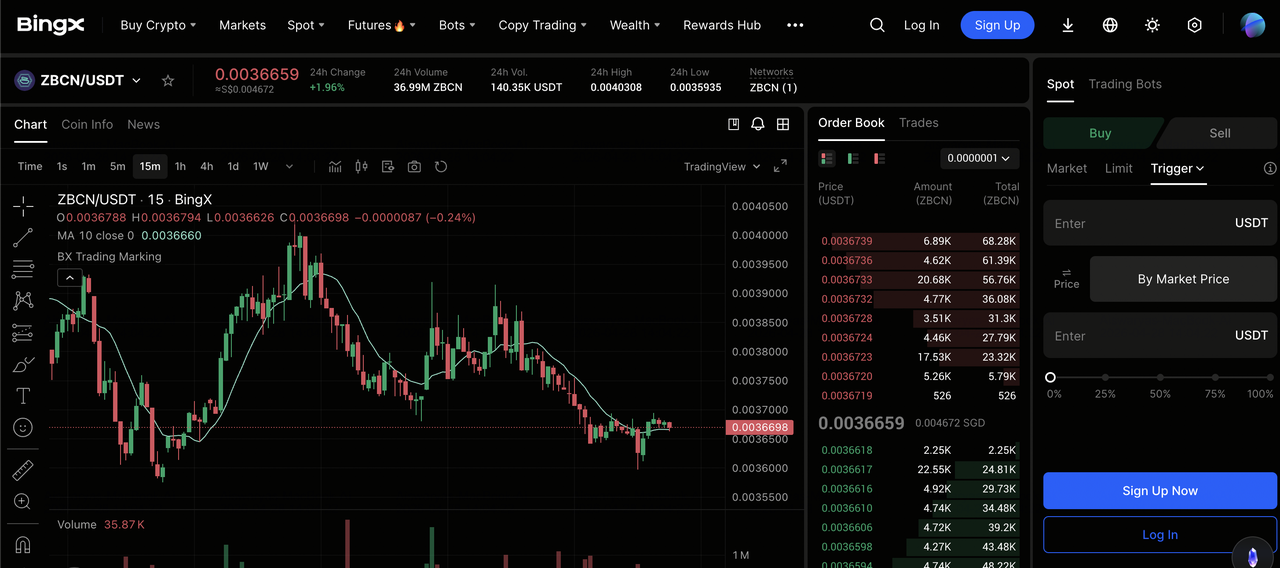
ZBCN/USDT trading pair on the BingX spot market
Buy, Sell, or HODL ZBCN on the Spot Market
- Deposit USDT into your BingX account.
- Go to Spot and search for the ZBCN/USDT pair.
- Select Market (instant buy) or Limit (target price) order.
- Enter your amount and click Buy ZBCN.
5 Key Considerations Before Investing in Zebec (ZBCN)
Before allocating capital to the $ZBCN ecosystem, it is essential to evaluate the structural shifts in its tokenomics alongside the technical and regulatory dependencies of its growing PayFi infrastructure.
- Revenue-Backing: Monitor the protocol's annual payroll volume. Sustained growth in volume directly correlates with the Buyback and Burn strength.
- Regulatory Compliance: Zebec’s success depends on its ability to maintain its partnership with licensed entities like Nacha and MoneyGram.
- Ecosystem Expansion: Keep an eye on Zebec Network's Stellar and Ripple integrations, as these provide the off-ramps that make the project useful to non-crypto users.
- Market Sentiment: As a leading PayFi asset, $ZBCN often moves with the broader RWA and Solana-ecosystem trends.
- Supply Dynamics: Now that the final 2026 unlocks are over, the focus shifts entirely to demand-side utility rather than supply-side inflation.
Final Thoughts: Should You Invest in Zebec Network ($ZBCN)?
By late April 2026, Zebec Network has successfully transitioned from an experimental protocol into a functional pillar of the PayFi economy. By replacing legacy payroll latency with a high-velocity streaming model and integrating physical card services, the project has established a revenue-generating ecosystem backed by real-world utility. For investors, $ZBCN serves as a direct proxy for the growth of on-chain payments and the institutional adoption of stablecoin settlement rails.
Strategic participation requires monitoring the protocol’s monthly payroll volume and the consistency of its revenue-funded buyback program, as these represent the core drivers of long-term token value. While the conclusion of major token unlocks has stabilized the supply side, the platform’s future performance remains tied to its ability to scale across multiple chains and maintain regulatory compliance in global markets.
Risk Reminder: Digital asset investments, particularly in high-volatility infrastructure tokens like Zebec (ZBCN), carry significant market risk. Price fluctuations may occur based on regulatory shifts, technical vulnerabilities, or broader market sentiment. Always perform your own research, utilize BingX risk management tools such as Stop-Loss orders, and only trade capital you can afford to lose. BingX is not responsible for any trading losses incurred.
Related Reading
- Top Payment Finance (PayFi) Crypto Projects to Watch in 2026
- USDC vs. USDT: Key Differences and Which Stablecoin to Choose in 2026?
- A Beginner's Guide to Stablecoins and How They Work (2026)
- Top x402 Payment Protocol Projects for Blockchain-Based AI Agents
- What Is Bitcoin Cash (BCH) Payments Blockchain and How Does It Work?