
USDC, also known as USD Coin, is a unified dollar-pegged stablecoin issued by Circle Internet Financial. As of May 2026, USDC has a market capitalization exceeding $76.9 billion and continues to be one of the most trusted, regulated, and institutionally adopted stablecoins in the global crypto market.
Designed to maintain a strict 1:1 peg with the US dollar, USDC is fully backed by high-quality reserves and undergoes regular independent audits. The project focuses on bridging traditional finance with blockchain technology, offering fast, low-cost, and compliant digital dollar transactions.
With strong institutional support and integration across major blockchains, USDC serves as a reliable safe haven during market volatility and a foundational tool for trading, remittances, payroll, DeFi, and tokenized real-world assets. Its emphasis on transparency and regulatory compliance has made it the preferred stablecoin for banks, corporations, and institutional investors seeking reliable on-chain dollar exposure.
Read more: Circle (CRCL) Stock Outlook for 2026: Can USDC Growth and Dominance Drive CRCL Stock to $250+?
Key Takeaways
- USDC is a dollar-pegged stablecoin issued by Circle, fully backed by reserves and supported by regular independent audits.
- It offers high regulatory compliance, making it the preferred stablecoin for institutions in the U.S. and Europe under frameworks like the GENIUS Act and MiCA.
- USDC supports multi-chain operations and is widely used for trading, payroll, remittances, and DeFi applications.
- Holders can earn competitive yields through DeFi lending protocols and tokenized U.S. Treasuries.
- BingX stands as the top choice for trading USDC with deep liquidity and low fees across spot and futures markets.
What Is Circle's USD Coin (USDC) Stablecoin?
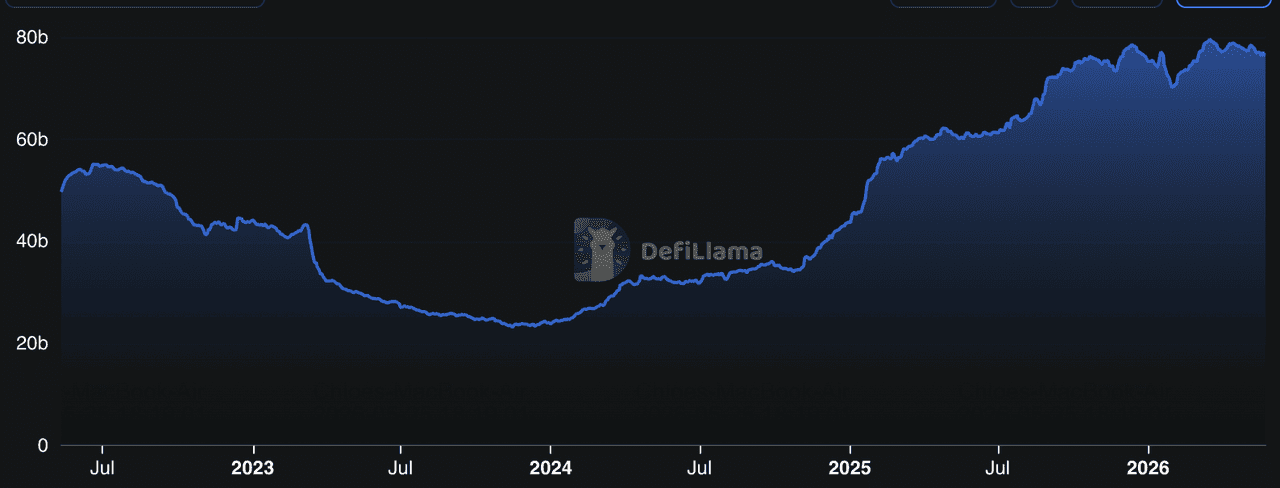
Source: DefiLlama USDC Market Cap as of May 2026
USDC (USD Coin) is a dollar-pegged stablecoin issued by Circle Internet Financial. As of May 2026, it maintains a market capitalization of over $76.9 billion and ranks as one of the most trusted regulated stablecoins worldwide. USDC is engineered to always be redeemable at a 1:1 ratio with the US dollar, backed by a conservative portfolio of cash, cash equivalents, and short-term U.S. Treasuries.
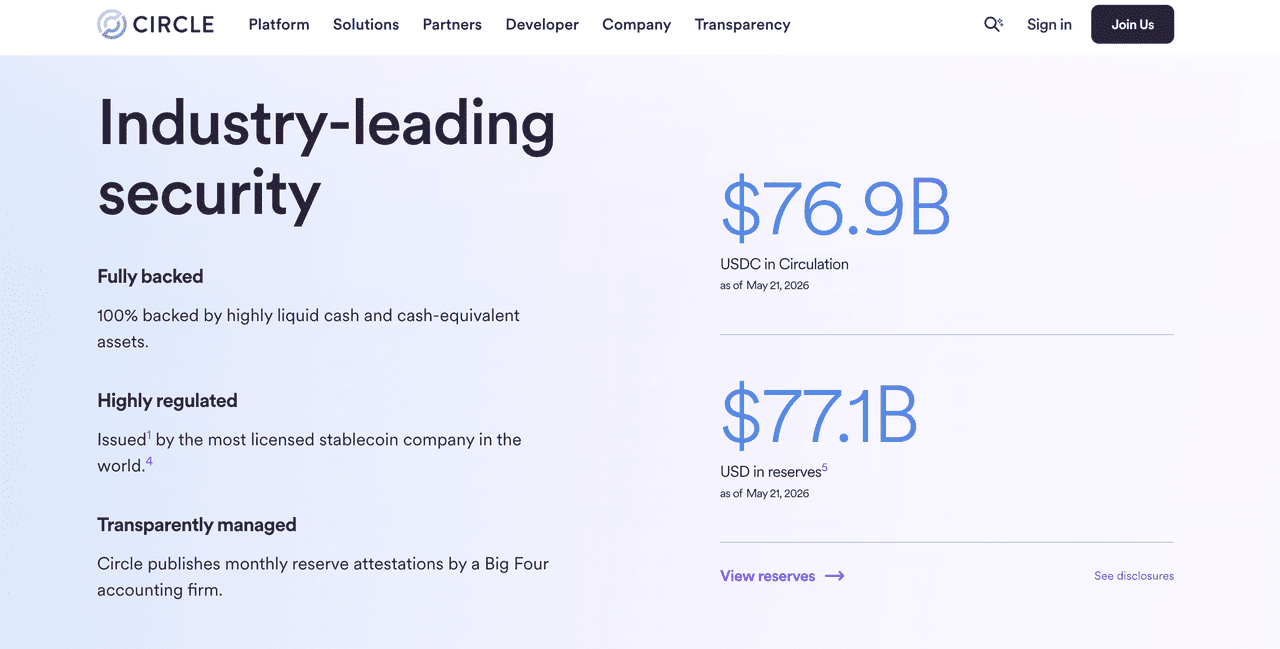
Source: Circle
Circle has positioned USDC as a compliant and transparent digital dollar, making it especially attractive to institutions, payment providers, and enterprises. Its strong focus on regulatory alignment and audit transparency sets it apart from less regulated stablecoins, giving users and businesses confidence in its stability and redeemability. A core aspect of USDC is its broad multi-chain availability and seamless integration with traditional financial systems, enabling efficient payroll, cross-border payments, and advanced DeFi strategies.
Read More: USDC vs. USDT: Key Differences and Which Stablecoin to Choose in 2026?
How USDC Works
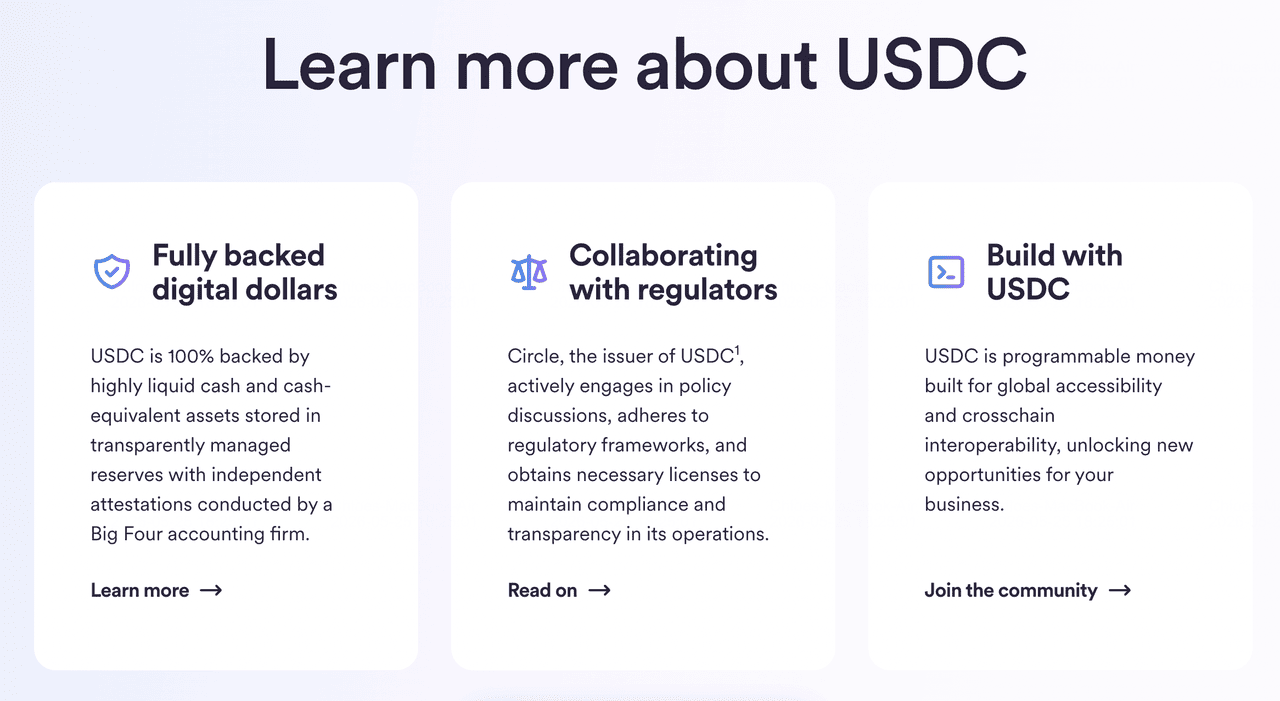
USDC operates on a transparent, reserve-backed issuance model managed by Circle. When users or institutions deposit USD or equivalent high-quality assets, Circle mints new USDC tokens on the chosen blockchain. When USDC is redeemed, the corresponding tokens are burned and equivalent reserves are returned to the redeemer. This direct link between issuance/redemption and reserves helps maintain the stable 1:1 peg.
Circle publishes monthly attestation reports and engages independent accounting firms to verify that reserves fully back the outstanding supply. As of May 2026, reserves primarily consist of cash, cash equivalents, and short-term U.S. Treasuries, ensuring both safety and liquidity. The process is designed to be secure, auditable, and compliant with evolving global regulatory standards.
Read more: What are Circle Tokenized Stocks CRCLX (xStocks) and CRCLON (Ondo) and How to Invest?
USDC Audits and Backing
USDC is recognized for maintaining one of the highest standards of transparency among major stablecoins. Circle conducts regular independent audits and publishes detailed reserve reports, giving users, regulators, and institutions clear visibility into the assets backing every USDC token.
As of May 2026, reserves are predominantly held in cash, cash equivalents, and short-term U.S. Treasuries, providing strong liquidity and minimal credit risk. This rigorous auditing and attestation process has significantly contributed to USDC's institutional adoption and helped differentiate it from less transparent competitors. '
The combination of conservative asset allocation and independent verification builds long-term trust in the token's stability.
USDC's Regulatory Dominance in the Stablecoin Market
In 2026, USDC has established itself as the preferred stablecoin for highly regulated entities in both the United States and Europe. Supported by progressive frameworks such as the GENIUS Act in the U.S. and MiCA in the European Union, USDC benefits from clear compliance pathways that many other stablecoins struggle to meet.
This regulatory alignment has accelerated adoption among banks, payment processors, fintech companies, and asset managers who require compliant on-chain solutions for treasury management, payroll, and tokenized asset strategies. USDC's regulatory-friendly design continues to strengthen its position as the go-to stablecoin for institutional-grade applications.
Read more: Understanding 6 Different Types of Stablecoins: A 2026 Breakdown
USDC Key Trends and Utility in 2026
USDC continues to expand its real-world utility across multiple sectors. Stablecoin Payroll has become a mainstream solution, with USDC frequently chosen for global cross-border salary payments due to its settlement speed and significant cost efficiency compared to legacy banking rails. Institutional Yields remain highly attractive, with USDC holders able to earn 4-6% yields in DeFi money markets through lending protocols or by accessing tokenized U.S. Treasuries directly on-chain. These opportunities provide stable, low-risk returns while maintaining full liquidity and strong regulatory compliance.
What Are the Benefits and Limitations of USDC?
USDC offers numerous advantages including strong regulatory compliance, regular independent audits, and deep institutional trust. Its multi-chain support ensures fast and low-cost transactions across major networks. USDC is widely accepted as collateral in DeFi and serves as a reliable bridge for cross-border payments and payroll. Users benefit from competitive yield opportunities in DeFi and tokenized real-world assets.
The combination of transparency, security, broad ecosystem integration, and regulatory alignment makes USDC one of the most dependable stablecoins for both retail and institutional users seeking reliability in volatile markets.
Strengths of USDC
- Transparent and Verifiable Reserves: USDC is fully backed 1:1 by cash and U.S. Treasury assets. Each month, Circle releases attestation reports verified by top auditing firms like Deloitte. The funds are held in segregated accounts with trusted financial institutions such as BNY Mellon and BlackRock, providing clear visibility into what backs every token.
- Regulated and Policy-Aligned: USDC is designed to comply with financial regulations. Circle holds licenses in the United States, European Union, and Singapore, and works closely with regulators on stablecoin policy frameworks. It was also the first stablecoin issuer to secure a BitLicense in New York.
- Designed for DeFi and On-Chain Use: USDC is a top asset across major DeFi protocols, including Aave, Compound, Uniswap, and Curve. It’s often used as collateral for loans, liquidity pools, and yield farming strategies. Developers also use USDC in DAO treasuries and smart contracts because of its predictable value and compliance-first design.
- Strong Banking and Infrastructure Partners: Circle's reserve partners include top-tier banks and asset managers, reducing risk compared to smaller or opaque custodians. USDC is also supported by Circle Mint, Cross-Chain Transfer Protocol (CCTP), and the Circle Payments Network (CPN), which enable cross-chain swaps, treasury management, and fiat on/off ramps for businesses.
Weaknesses and Limitations of USD Coin
- Lower Liquidity Compared to USDT: While USDC is widely available, it still lags behind USDT in total trading volume and global reach. Some exchanges and emerging market P2P platforms still favor USDT due to higher demand and deeper liquidity.
- Banking and Counterparty Risks: USDC’s backing depends heavily on the traditional banking system. In March 2023, Circle revealed it had $3.3 billion in reserves stuck at Silicon Valley Bank (SVB) during its collapse. This caused USDC to briefly lose its peg, trading as low as $0.88 before recovering. highlighting risks tied to centralized banking partners.
- Geographic Concentration: USDC adoption is strongest in North America, Europe, and regulated financial hubs. It sees less usage in informal markets, where unbanked users and traders often prefer USDT or cash alternatives. This limits its role in global remittances and informal commerce.
- Interest Rate Sensitivity: Much of Circle’s revenue comes from interest on USDC reserves. If interest rates drop, profitability could decline. This may impact USDC’s incentives, growth strategy, or support services over time.
USDC is often called the “regulated stablecoin” because of its transparency, strong financial partners, and focus on compliance. While it may not be as widely used as Tether in all markets, it’s a leading choice for users who value security, clarity, and policy alignment, especially in enterprise or institutional contexts.
USDC vs. USDT: Key Differences Between the Leading Stablecoins
USDC and USDT are the two dominant dollar-pegged stablecoins, but they cater to slightly different audiences. USDC prioritizes regulatory compliance, regular full audits, and institutional trust, making it the preferred choice for banks, corporations, and regulated DeFi activities.
USDT offers broader multi-chain availability and higher overall liquidity in many retail trading pairs. While USDT maintains a larger overall market share in some regions, USDC is often preferred for its transparency and stronger regulatory positioning, especially in Europe and among institutional players seeking compliance certainty.
Read More A Beginner's Guide to Stablecoins and How They Work (2026)
What are the Tokenomics of USDC?
USDC is issued by Circle with no fixed maximum supply. New tokens are minted when demand increases and burned upon redemption. Each USDC is backed 1:1 by reserves consisting of cash and short-term U.S. Treasuries. Circle provides regular attestations and independent audits to maintain transparency. The token's value is supported by strong reserve management and market confidence in Circle's compliance standards.
How to Buy USDC on BingX
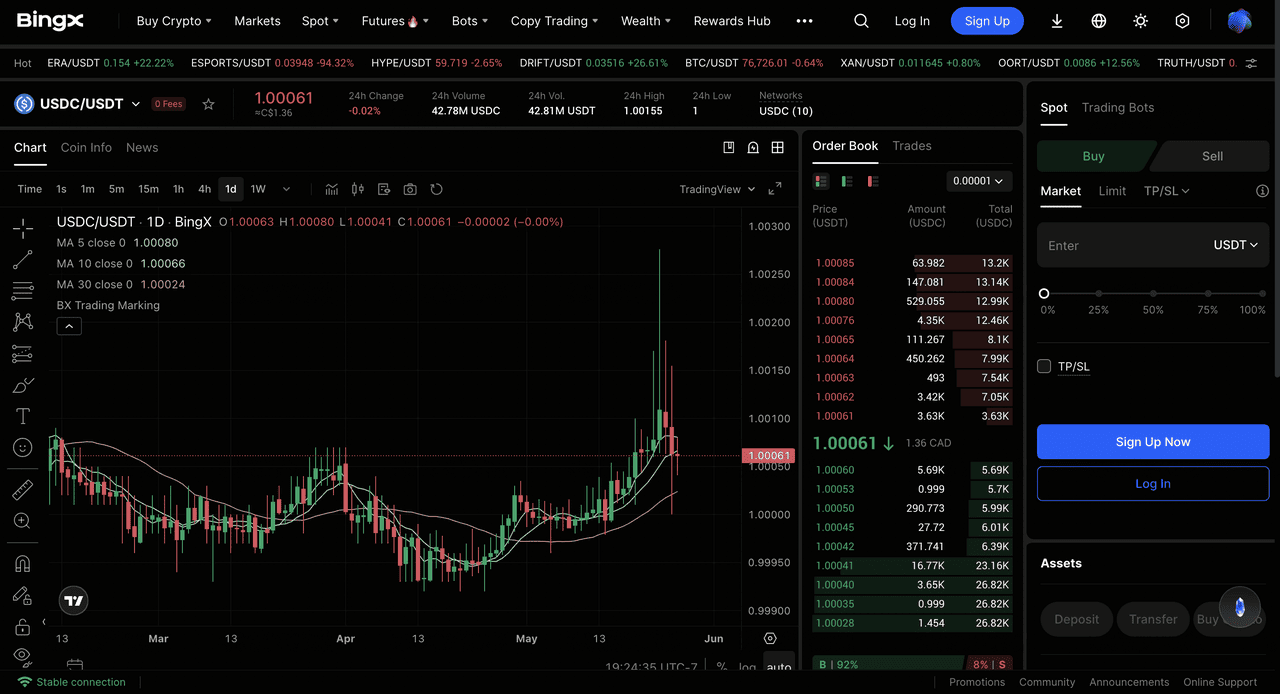
Getting started with USDC or USDT on BingX is simple. Just follow these steps:
- Create an Account: Head to the BingX website and sign up using your email or mobile number. Once your account is created, complete the basic KYC verification process. This is required to unlock deposit, trading, and withdrawal features.
- Deposit Funds: Next, go to the Deposit section and choose your preferred stablecoin. For USDC, options like ERC-20 (Ethereum) or Polygon are available, depending on your wallet setup.
- Buy Using Spot: Go to the BingX spot market and search for USDC/USDT or another desired trading pair. Choose Buy, set your amount, and confirm the order.
Conclusion: Why You Should Buy USDC on BingX
USDC remains one of the most trusted and regulated stablecoins in 2026 thanks to its transparency, institutional backing, and strong compliance standards. With robust audits, multi-chain support, and growing adoption in payroll, remittances, and DeFi, it continues to serve as a reliable digital dollar in the crypto ecosystem.
BingX serves as the top choice for trading USDC, offering deep liquidity, low fees, and seamless integration for both spot and futures markets. Whether protecting against volatility, executing fast trades, or earning yield, BingX enables efficient and secure management of USDC holdings.
As the crypto market matures, holding and trading USDC on reliable platforms like BingX provides users with stability, flexibility, and confidence in navigating both bull and bear markets.
Related Reading
- What Are the Top Stablecoins in the Solana Ecosystem(2026)?
- What Are the Top 5 Commodity‑Backed Stablecoins to Know in 2026?
- What Are the Top 4 Algorithmic Stablecoins to Know in 2026?
- Top Euro‑Pegged Stablecoins to Know in 2026
- What Is the U.S. Crypto Week 2026 and How Could It Impact Bitcoin, Stablecoins, and Altcoins?
- Understanding 6 Different Types of Stablecoins: A 2026 Breakdown
- What to Know About the GENIUS Act as Stablecoins Soar Above $250 Billion
