
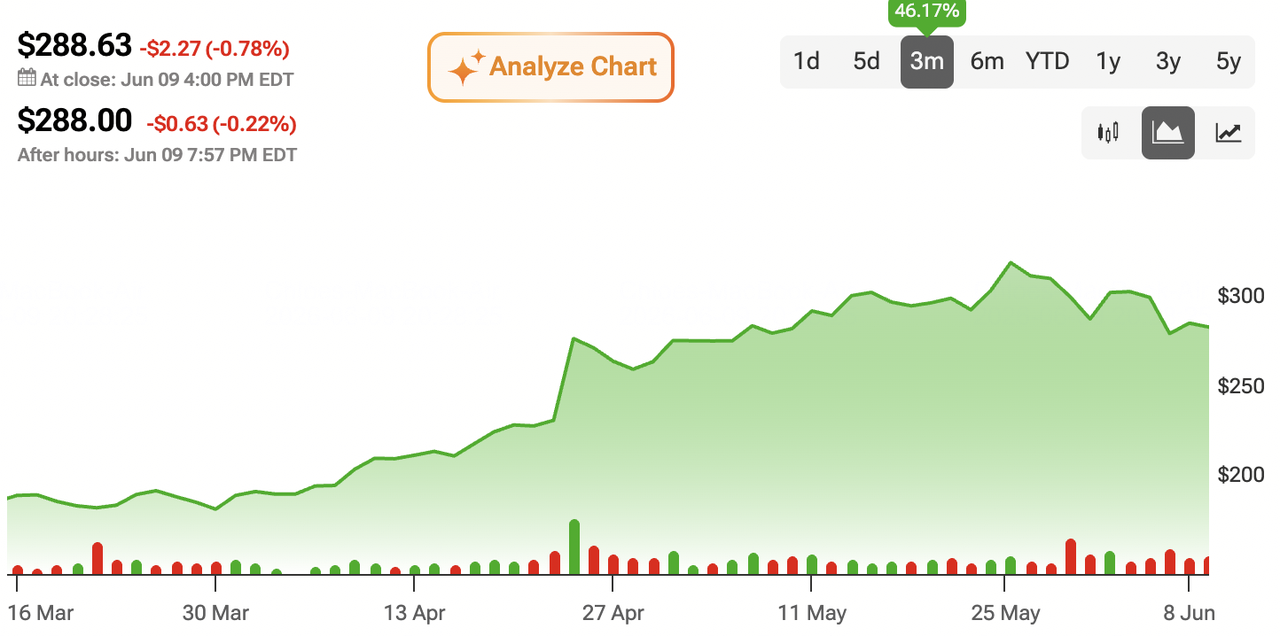
Texas Instruments Incorporated (TXN) is a global semiconductor design and manufacturing company and one of the top 10 semiconductor companies worldwide based on sales volume. As of mid-2026, TXN trades at approximately $288.63 per share, reflecting steady momentum driven by the company's strong rebound in analog semiconductor demand and massive artificial intelligence (AI)-driven infrastructure investments.
The company operates internal wafer fabrication facilities and is rapidly scaling its manufacturing capacity while diversifying into high-performance computing, data centers, and advanced automotive applications. With a focus on structural cost advantages and operational efficiency, TXN is positioned to capitalize on both the cyclical recovery of analog microchips and the surging demand for power-management chips in advanced hardware setups. You will also discover how to gain exposure to Texas Instruments Incorporated (TXN) stock futures through BingX TradFi.
Read more: Top AI Semiconductor Stocks to Buy in 2026: AI Chips and Supply Chain Complete Guide
Key Highlights: Top 5 Things for TXN Investors to Know in 2026
- Analog Chip Market Leadership: Focuses on analog chips and embedded processors, which account for more than 80% of its massive global revenue.
- Data Center and AI Expansion: Strategic positioning inside high-performance data centers, supplying crucial power-management hardware for NVIDIA and next-generation GPU clusters.
- Massive Capacity Growth: Heavy capital expenditures (CapEx) to expand internal 300mm wafer fabrication capacity, ensuring a multi-decade supply chain moat.
- Strong Financial Position: Boasts robust earnings-per-share (EPS) growth expectations of roughly 16.7% annually, alongside a solid dividend yield near 1.8% to 2.75%.
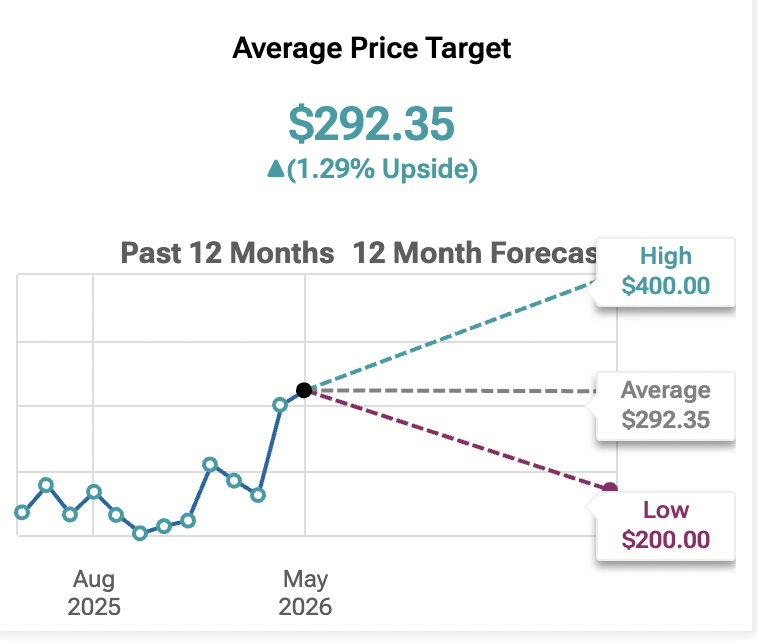
- Analyst Sentiment: Wall Street maintains an average consensus price target around $291.46, with an optimistic street-high target peaking at $400.
What Is Texas Instruments (TXN)?
Source: TipRanks
Texas Instruments Incorporated (TXN) is an American multinational semiconductor company headquartered in Dallas, Texas, that designs, manufactures, and tests analog chips and embedded processors.
In 2026, Texas Instruments is recognized as a foundational pillar of modern electronics and a leading infrastructure operator for the digital age. Its core value lies in combining massive internal production capacity with a highly diversified portfolio of over 45,000 analog products and customer design tools, serving industrial, automotive, and enterprise computing markets.
Key Growth Phases Over the Years
- The Foundation and Reorganization Phase (1930 to 1951): Emerged from Geophysical Service Incorporated (GSI), a seismic and defense electronics firm founded in 1930. Reorganized and renamed Texas Instruments in 1951 by Cecil H. Green, J. Erik Jonsson, Eugene McDermott, and Patrick E. Haggerty.
- The Silicon Innovation Era (1954 to 1990): Produced the first commercial silicon transistor (1954) and transistor radio. Jack Kilby invented the integrated circuit in 1958 at TI, followed by TI inventing the handheld calculator (1967), the single-chip microcontroller (1970), Digital Light Processing (DLP) technology (1987), and the popular TI-81 graphing calculator (1990).
- The Pure-Play Semiconductor Era (1997 to 2011+): Sold its defense business to Raytheon Company in 1997 to focus entirely on digital and analog solutions. Acquired National Semiconductor in 2011 to build the industry's most comprehensive analog chip portfolio.
Read More: Nvidia (NVDA) Stock Price Outlook for 2026: Can Blackwell and Vera Rubin Take NVDA Back to $300?
TXN 2025 Performance Overview: The Infrastructure Scale Year
In 2025, Texas Instruments experienced strong acceleration as adoption of its analog power chips and embedded processor services expanded rapidly amid surging data center buildouts and automotive electronics demands. The company's internal manufacturing operations provided consistent stability and long-term delivery security, while Data Center and Industrial segments delivered significant growth through expanded design wins and deep tier-one technology integrations.
This powerful combination of factors propelled Texas Instruments to record fundamental progress, solidifying its position as a leading specialized end-to-end chip provider and driving meaningful shareholder value throughout the year.
TXN Stock Surges Above $300 as Market Cap Solidifies
Texas Instruments' stock exhibited notable volatility during 2025 and early 2026, finding a solid baseline as consistent industrial contract wins and revenue scaling balanced heavy cap-ex factory buildout requirements. By mid-2026, Texas Instruments maintained robust momentum, hovering near the $300 to $305 level following high-profile target upgrades from institutional desks like Wells Fargo, with its market capitalization reflecting the market's ongoing evaluation of the company as a scalable, diversified chip manufacturing leader.
Texas Instruments' Financial Performance and 2026 Outlook
Texas Instruments delivered exceptional top-line growth in 2025, with full-year revenue climbing significantly year-over-year as customer inventory corrections began to clear out. The trailing quarters generated strong revenue momentum, representing a massive surge from previous cyclical lows.
This momentum carried powerfully into 2026, with the company officially guiding full-year 2026 revenue growth targets to an expected 10.5% annual rate, supported by cyclical demand recovery and deep data center expansion.
The Texas Instruments Thesis for 2026: 5 Pillars of TXN Stock Valuation
Source: TipRanks
While legacy microcontrollers remain a key foundation, Texas Instruments' valuation in 2026 increasingly reflects its evolution into a foundational digital infrastructure platform with exposure to both hardware automation and AI hardware acceleration.
1. Market Domain Leadership: The Core Pillar
Owning a massive portfolio of over 45,000 analog products ensures that TXN chips are embedded in nearly every electronic device on earth, creating an unmatched customer ecosystem.
2. High-Performance AI Power Management: The Growth Pillar
Strategic expansion into high-performance computing data centers, providing critical power regulation components for advanced NVIDIA GPU architectures, leverages existing sales channels for high-margin enterprise revenue streams.
3. Fabrication Scaling and Operational Efficiency: The Execution Pillar
Rapid deployment of advanced internal 300mm wafer fabrication plants reduces production chip costs by up to 40%, driving massive structural margin advantages over fabless competitors.
4. Robust Shareholder Capital Allocation: The Financial Pillar
Consistently high operational profitability funds organic factory expansion while sustaining reliable dividend payouts (1.8% to 2.75% yield) and aggressive share buybacks.
5. High-Barrier Manufacturing Moat: The Defensive Pillar
Owning proprietary, geographically diversified manufacturing facilities combined with deep technical expertise creates substantial long-term barriers to entry and massive structural revenue durability.
Read More: Intel (INTC) Stock Forecast 2026: Foundry Breakthrough to $89 or Value Trap?
Texas Instruments Stock Price Forecasts for 2026: Bull vs. Bear Outlook
Institutional views on Texas Instruments remain active, reflecting strong upside potential tied to global chip demand and internal capacity utilization rates.
|
Institution / Analyst |
2026 Price Target |
Market Outlook |
|
Wells Fargo |
$300 |
Bullish: Strong conviction on data center acceleration and major target upgrade execution. |
|
Bank of America |
$370 |
Bullish: Overweight rating based on long-term 300mm wafer cost advantages and market share. |
|
Market Consensus (Aggregated) |
$291.46 |
Moderate Buy: Balanced view on analog chip cyclical rebound and industrial electronics upgrades. |
|
Rosenblatt Securities |
$240 |
Neutral: Hold rating tracking near-term margin pressure from elevated internal build expenditures. |
|
Stifel |
$200 |
Bearish: Focus on near-term free cash flow contraction relative to historical valuation multiples. |
Source: Aggregated from MarketBeat, TipRanks, Zacks, Yahoo Finance, and analyst reports (as of mid-2026)
The Bull Case: Analog Rebound and AI Hardware Utilization Drive TXN Higher
Bulls focus on continued industrial segment strength, operational utilization gains across new 300mm factories, and successful monetization of high-performance data center power management. If Texas Instruments executes seamlessly on its volume output strategy, the stock could see substantial upward valuation re-rating toward its $400 street-high target.
The Bear Case: Elevated Capital Expenditures and Macro Headwinds Pressure the Stock
Bears highlight near-term profit margin squeezes caused by heavy factory construction costs, potential legacy market sluggishness, and cyclical timing risks in the automotive sector. Any slowdown in global hardware spending or delayed factory utilization optimization could weigh heavily on performance, drawing the stock down toward the lower $200 boundary.
Read more: How to Trade Forex, Commodities, Stocks, and Indices With BingX TradFi: A Beginner's Guide (2026)
5 Critical Risks to Watch for Texas Instruments Investors in 2026
While Texas Instruments offers substantial upside through its industrial analog recovery and artificial intelligence (AI) power platform, investors face capital-intensive scaling, execution, and market challenges.
- Cyclical Demand Sluggishness and Macro Economics Risks: A significant portion of Texas Instruments' revenue and profitability remains directly tied to industrial automation and automotive cycles. Prolonged inventory corrections or macro slowdowns in legacy global electronics markets could materially reduce near-term factory utilization rates.
- Near-Term Margin Compression and Capacity Scaling Risks: Rapid expansion of internal chip fabrication capacity involves massive upfront capital expenditure requirements. Extended periods of high depreciation costs from new factories before they achieve full volume utilization could compress gross margins and weigh on quarterly free cash flow.
- Customer and Industry Sector Concentration: Dependence on automotive and heavy industrial electronics markets could impact top-line results if specific regulatory or supply chain slowdowns occur within those core industry verticals.
- Supply Chain and Geopolitical Dependencies: Sourcing raw manufacturing materials and operating global testing and assembly facilities requires uninterrupted logistical channels. Sudden shifts in international trade policies, tariffs, or factory cost overheads could increase global operating expenses.
- Regulatory, Policy, and Valuation Risks: Texas Instruments navigates complex international chip manufacturing subsidies and domestic technology incentive programs. Additionally, the stock's premium valuation leaves limited room for error, because if industrial recovery timelines drag or data center expansion orders moderate, multiple contractions could follow.
Read More: Arm Holdings (ARM) Stock Outlook 2026: AI Licensing and the $200+ Price Target
How to Trade Texas Instruments (TXN) Stock Futures on BingX TradFi
BingX TradFi offers USDT-settled TXN stock perpetual contracts, allowing traders to take long or short positions on TXN without a traditional brokerage account. The platform provides real-time volatility tools and features that can be useful when managing positions around earnings or major contract announcements.
Long or Short TXN Stock Perpetuals with USDT on BingX Futures
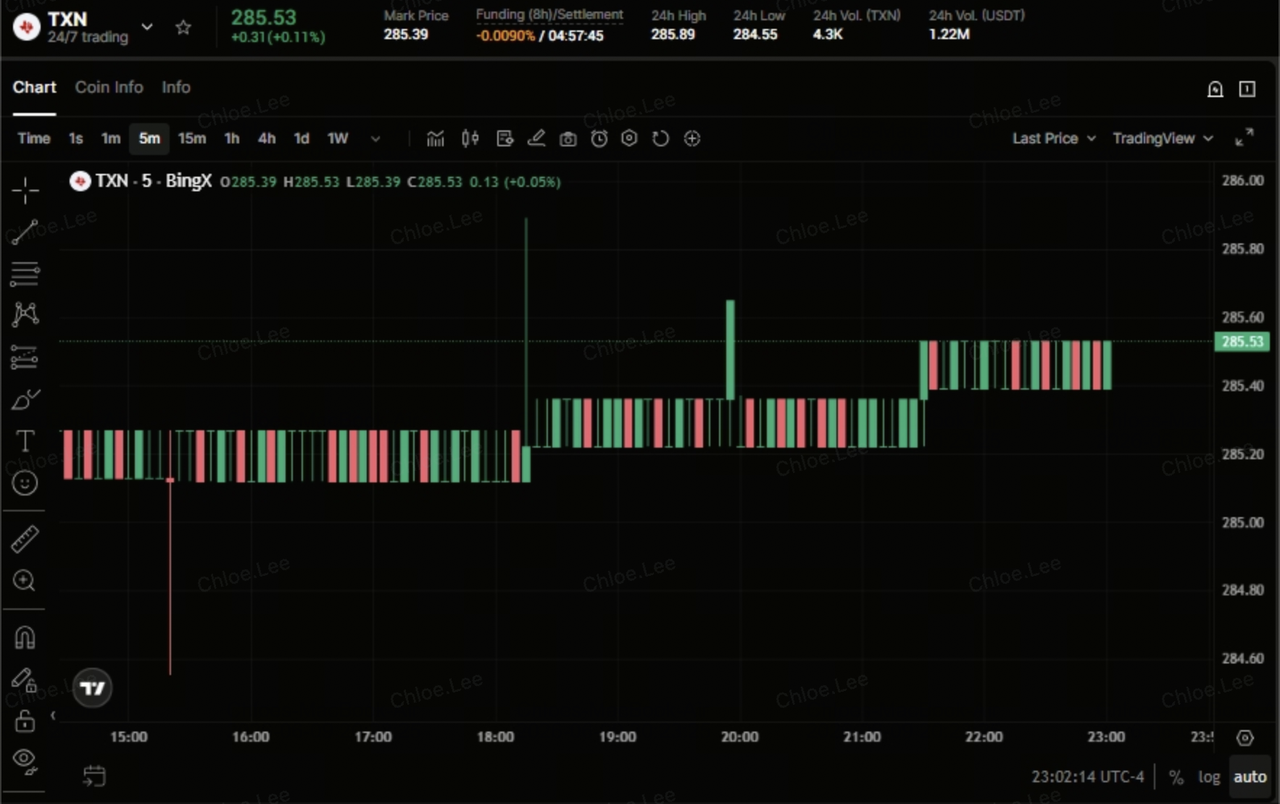
- Go to the BingX TradFi section and select Stock Futures.
- Search for the TXN/USDT perpetual contract.
- Check the trading session before placing your order. Liquidity is typically lower during extended sessions, which can result in wider spreads and higher volatility.
- Select your Margin Mode (Isolated or Cross) and set your leverage.
- Choose Open Long if you expect momentum, strong chip architecture updates, or positive analog cycle inventory recovery. Choose Open Short if you anticipate margin pressures from heavy CapEx spending, factory execution delays, or valuation pullbacks.
- Set Take-Profit (TP) and Stop-Loss (SL) levels immediately to manage risk against TXN's price swings driven by earnings, news, or global semiconductor production milestones.
Conclusion: Should You Invest in Texas Instruments (TXN) in 2026?
Texas Instruments represents a compelling play on both analog microchip cyclical recovery and the growing power demands of the global AI infrastructure buildout. For investors bullish on proprietary, highly optimized chip production capabilities and long-term cost moats, successful deployment of their internal manufacturing plans could deliver strong structural returns.
At the same time, the short-term capital expense drag and reliance on broader industrial production cycles make near-term timing an important factor. Monitor factory gross margins, quarterly EPS growth rates, and industrial demand stabilization closely.
Risk Reminder: Trading and investing in equities like TXN involves substantial risk of capital loss. Investors should conduct thorough independent research and consider professional financial advice before allocating capital.
Related Reading
- Top AI Tokenized Stocks to Watch in 2026
- Top 10 AI Infrastructure Stocks to Buy in 2026: Chip Manufacturing and Design Leaders
- Top AI Compute and GPU Stocks to Buy in 2026: The Shift to Inference and Custom Silicon
- Top AI Cloud Infrastructure Stocks to Buy in 2026 Amid Hyperscaler Capex and the Neocloud Boom
- Roundhill Memory ETF (DRAM) Forecast 2026: $1.5B AI Supercycle or 'RAMmageddon' Trap?