
Cheniere Energy (LNG) is the largest U.S. producer and exporter of liquefied natural gas, operating an integrated chain from gas procurement and pipeline transport to liquefaction, vessel chartering and delivery. Its Sabine Pass and Corpus Christi terminals provide roughly 55 million tonnes per annum of operating capacity. Long-term contracts support cash-flow visibility, while expansion projects leave the stock sensitive to construction timing, regulatory approvals and global gas spreads.
Its latest quarter showed the value of higher throughput. Cheniere Energy Q2 2026 revenue increased 24% to $5.732 billion, adjusted EBITDA rose 27% to $1.804 billion and exported cargoes increased 19% to 184. Cheniere also raised its full-year adjusted EBITDA range to $7.90 billion to $8.40 billion, making capacity utilization and project delivery the central tests for the rest of 2026.
The LNG stock forecast for 2026 now centers on two competing views:
- The export-capacity and cash-flow case: Corpus Christi Stage 3, higher contracted volumes and reliable terminal operations could lift distributable cash flow and support further shareholder returns.
- The project-execution and margin case: construction delays, terminal outages or weaker realized LNG margins could reduce cash-flow estimates and limit the value created by new capacity.
This guide breaks down the LNG stock forecast, 2026 price scenarios, key risks and analyst outlooks, drawing on Cheniere Energy's August 6 Q2 2026 earnings release, 10-Q and market data through September 18, plus how to trade LNG stock futures on BingX TradFi with USDT collateral.
Top 5 Things for Cheniere Energy Investors to Know in September 2026
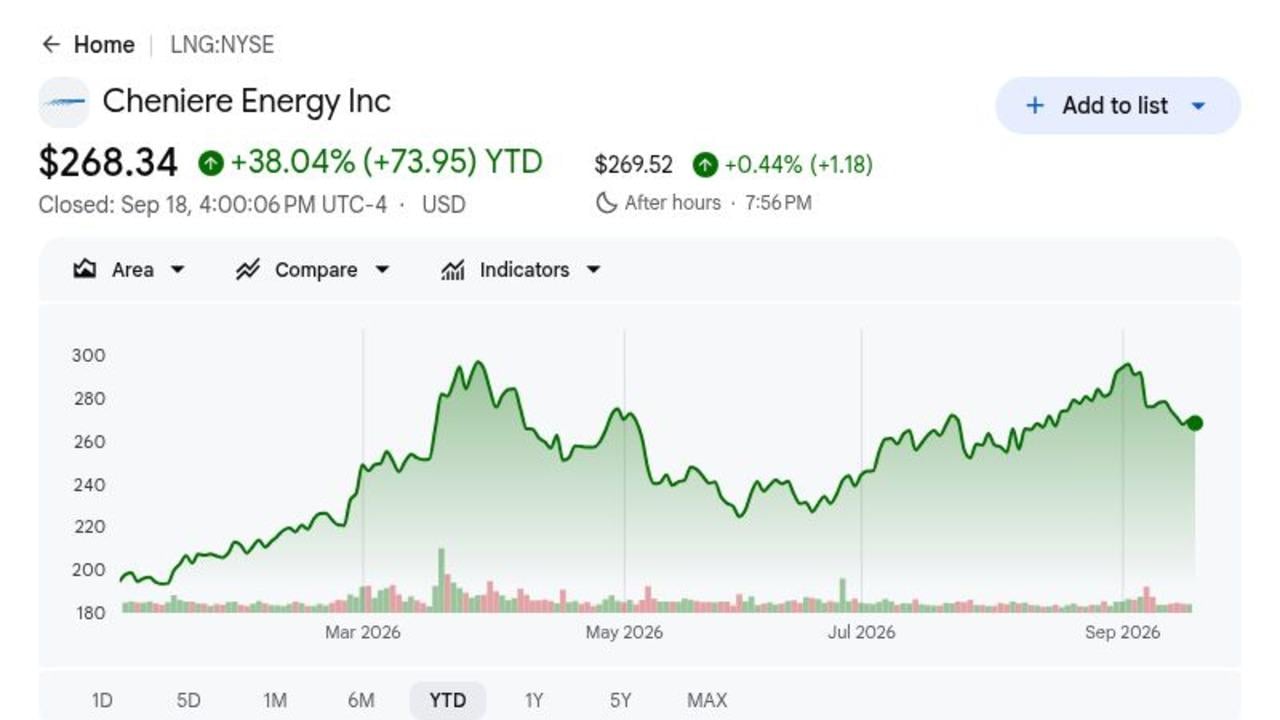
- LNG closed at $268.34 on September 18 after gaining 38.04% in 2026: The rally reflects higher export volumes and tighter global gas markets. Shares remain below RBC Capital's $319 target and the $340 Bull Case, leaving further upside dependent on continued operating and cash-flow growth.
- Q2 revenue rose 24% to $5.732 billion: Revenue increased from $4.641 billion a year earlier as higher recognized volumes and stronger margins expanded the earnings base. The result shows that new LNG capacity is already translating into reported sales.
- Cheniere exported 184 cargoes, up 19%: Exported volumes reached 672 TBtu, 22% above the prior-year quarter. Higher throughput creates operating leverage as additional liquefaction capacity enters service and existing trains maintain strong utilization.
- 2026 adjusted EBITDA guidance increased to $7.90 billion to $8.40 billion: The midpoint rose by $650 million from the previous range. Distributable cash flow guidance also increased by $550 million at the midpoint to $5.30 billion to $5.80 billion.
- Corpus Christi Stage 3 reached completion as Cheniere exported its 5,000th cargo: The August milestones moved seven midscale trains from construction into full operations and reinforced Cheniere's export scale. More than 40 mtpa of potential projects still depend on permitting and additional commercial commitments.
What Is Cheniere Energy (LNG)?
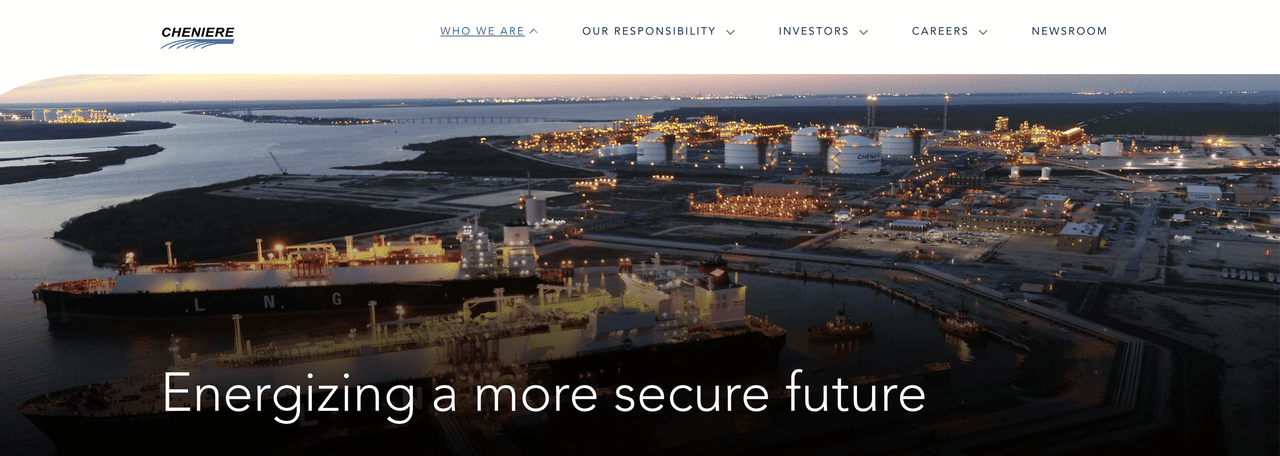
Cheniere is a full-service LNG company that buys natural gas, transports it through pipelines, cools it into liquid form and sells or delivers cargoes to customers worldwide. Sabine Pass in Louisiana supplies more than 30 mtpa of capacity, while Corpus Christi in Texas supplies more than 24 mtpa including the first six Stage 3 midscale trains. Revenue comes mainly from long-term sale-and-purchase agreements, capacity-linked fees and merchant cargoes, creating a mix of contracted cash flow and market exposure.
The long-term strategy centers on expanding the existing Gulf Coast platform rather than building isolated greenfield assets. Bechtel is performing early engineering and procurement for the first phase of the Sabine Pass expansion, while Corpus Christi Trains 8 and 9 add roughly 5 mtpa of planned capacity. Cheniere also maintains long-term supply relationships across Europe and Asia, including Taiwan's CPC, and uses its marketing, shipping and scheduling capabilities to redirect cargoes when regional demand and prices change.
Read More: Top Energy Stocks and ETFs to Buy in 2026: The AI Power Crunch Meets Geopolitical Volatility
Cheniere Energy (LNG) Q2 2026 Earnings Overview: Higher Volumes Lift Revenue, EBITDA and Guidance
Cheniere reported Q2 revenue of $5.732 billion, up 24% from $4.641 billion, diluted EPS of $14.65 versus $7.30 a year earlier, and adjusted EBITDA of $1.804 billion, up 27%. The company exported 184 cargoes and generated $1.171 billion of distributable cash flow, then raised 2026 adjusted EBITDA guidance by $650 million at the midpoint. The tension is that strong operating cash flow must fund expansion, shareholder returns and debt obligations at the same time.
Read More: Cheniere Energy (LNG) Q2 2026 Earnings News: $8.40B EBITDA Outlook Drives a 4.32% Rally
|
Financial Metric |
Guidance / Consensus |
Reported / Actual |
Surprise |
|
Q2 revenue |
Q2 2025: $4.641B |
$5.732B |
Grew. Up 24% year over year. |
|
Q2 diluted EPS |
Q2 2025: $7.30 |
$14.65 |
Improved. More than doubled year over year. |
|
Q2 net income attributable to Cheniere |
Q2 2025: $1.626B |
$3.068B |
Improved. Up 89% year over year. |
|
Q2 adjusted EBITDA |
Q2 2025: $1.416B |
$1.804B |
Grew. Up 27% on volume and margin. |
|
Q2 distributable cash flow |
— |
$1.171B |
Positive. Funded buybacks, dividends and growth. |
|
Q2 cargoes exported |
154 a year earlier |
184 |
Grew. Up 19% year over year. |
|
2026 adjusted EBITDA guidance |
$7.25B–$7.75B prior |
$7.90B–$8.40B |
Raised. Midpoint increased by $650M. |
|
2026 distributable cash flow guidance |
$4.75B–$5.25B prior |
$5.30B–$5.80B |
Raised. Midpoint increased by $550M. |
- Revenue of $5.732 billion grew 24%: Sales increased by $1.091 billion year over year as higher LNG volumes and stronger margins expanded the revenue base. The result shows new capacity is translating directly into reported growth.
- Diluted EPS reached $14.65 as attributable net income rose 89%: Net income increased to $3.068 billion, though derivative fair-value movements can make GAAP earnings volatile. Adjusted EBITDA and distributable cash flow remain cleaner measures of operating performance.
- Export volumes climbed 22% to 672 TBtu: Cheniere loaded 184 cargoes versus 154 a year earlier, showing how Corpus Christi commissioning expanded physical throughput. Higher utilization strengthens operating leverage across fixed liquefaction infrastructure.
- Adjusted EBITDA increased 27% to $1.804 billion: The $388 million improvement reflected higher volumes and margins per MMBtu. Stronger EBITDA supports capital returns while Cheniere continues investing in new capacity.
- Total liquidity of $7.475 billion supports more than 6 mtpa under construction: Cheniere ended June with $1.099 billion of cash and nearly $5.956 billion of available credit commitments. The balance provides flexibility for project spending, refinancing and future expansion.
Read More: Natural Gas Price Prediction 2026: $15 Global Energy Shock or U.S. Glut Trap?
Cheniere Energy (LNG) 2026 Investment Outlook: $340 Bull Case vs. $220 Bear Case
Cheniere's 2026 outlook depends on whether higher LNG export capacity can keep lifting volumes, EBITDA and distributable cash flow. Corpus Christi Stage 3 supports the upside, while construction spending, commodity exposure and project timing remain the main constraints.
The Bull Case: Higher LNG Exports Push LNG Toward $340
The Bull Case assumes Corpus Christi Stage 3 reaches reliable utilization, Train 7 contributes a full operating run rate and stronger global gas markets support merchant margins. Q2's 22% volume increase and the raised $7.90 billion to $8.40 billion EBITDA outlook provide the operating support.
A move toward $340 would require stable terminal operations, more long-term contracts and visible progress on Sabine Pass expansion approvals. Further guidance increases, annual production above 53 million tonnes and continued buybacks would strengthen the case.
The Base Case: Steady Export Growth Keeps LNG Between $275 and $310
The Base Case assumes long-term contracts and Stage 3 volumes support cash flow, while high construction spending and commodity volatility limit further valuation expansion. Cheniere remains profitable and returns capital, though investors wait for proof that new projects can earn attractive returns.
Under this scenario, LNG could trade mainly between $275 and $310. Production within the 53 to 54 million tonne forecast, distributable cash flow of $5.30 billion to $5.80 billion and steady project schedules would support the range. Major outages or guidance cuts would weaken the upper end.
The Bear Case: Project Delays and Lower Margins Pull LNG Toward $220
The Bear Case assumes commissioning problems, weaker LNG margins or regulatory delays reduce expected cash flow. Heavy capital commitments would then absorb more distributable cash flow and leave less room for buybacks and debt reduction.
A move toward $220 would become more likely if production falls below 53 million tonnes, adjusted EBITDA drops below guidance or expansion projects move forward without enough contracted demand. Lower cash flow and a higher required return would pressure the valuation.
LNG Stock Price Forecasts for 2026 By Wall Street Analysts
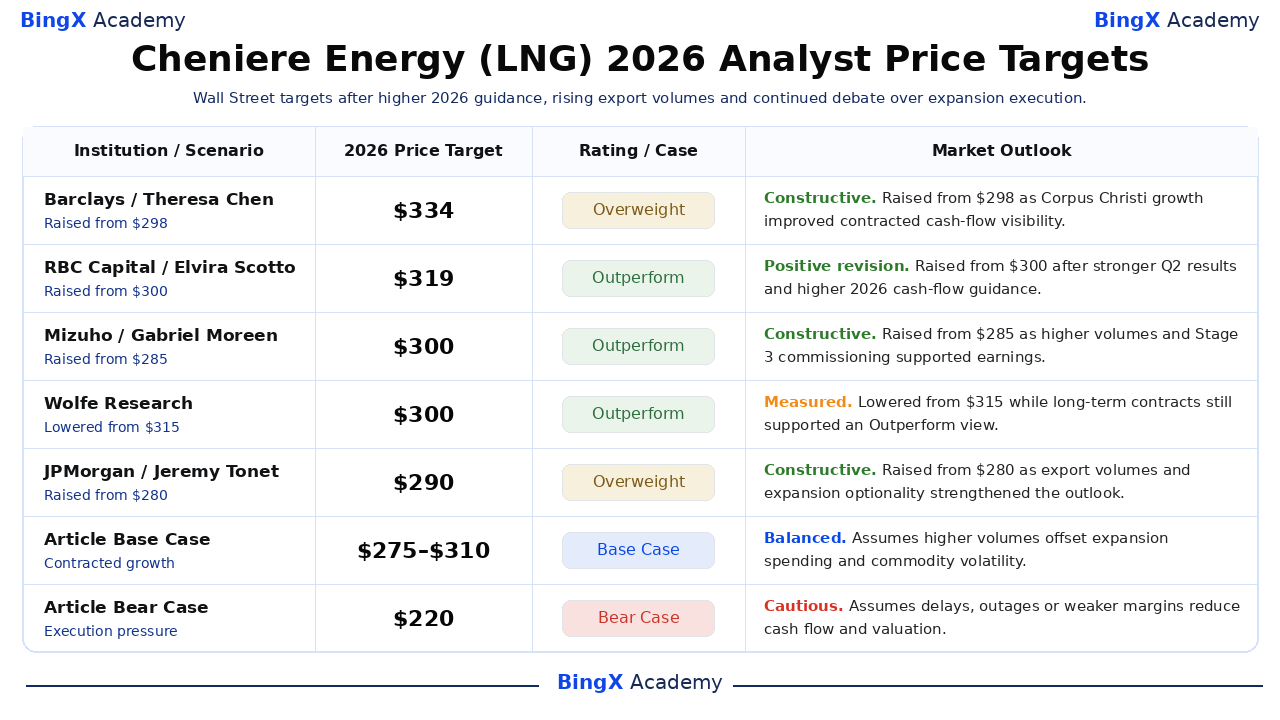
These dated third-party actions show a $290 to $334 target range rather than one guaranteed outcome. The Article Base and Bear Case rows are editorial scenarios and remain separate from Wall Street targets. Each target is a reference point based on the firm’s stated assumptions, not a guaranteed outcome or the article’s own forecast.
|
Institution / Scenario |
2026 Price Target |
Rating / Case |
Market Outlook |
|
Barclays |
$334 |
Overweight |
Constructive. February 27: raised from $298 as Corpus Christi growth improved cash-flow visibility. |
|
RBC Capital |
$319 |
Outperform |
Positive revision. August 24: raised from $300 after stronger Q2 results and guidance. |
|
Mizuho |
$300 |
Outperform |
Constructive. August 12: raised from $285 as higher volumes supported earnings. |
|
Wolfe Research |
$300 |
Outperform |
Measured. June 2: lowered from $315 while contracts supported the long-term view. |
|
JPMorgan |
$290 |
Overweight |
Constructive. May 15: raised from $280 on export volume and expansion optionality. |
|
Article Base Case |
$275 to $310 |
Base Case |
Balanced. Assumes higher volumes offset expansion spending and volatility. |
|
Article Bear Case |
$220 |
Bear Case |
Cautious. Assumes delays, outages or weaker margins reduce cash flow. |
How to Trade Cheniere Energy (LNG) Stock on BingX
Trade Cheniere Energy's export-volume, contract and expansion outlook using BingX TradFi and BingX AI tools. Because LNG can react sharply to global gas prices, terminal operations and regulatory decisions, traders should define both the catalyst and risk limits before entering a position.
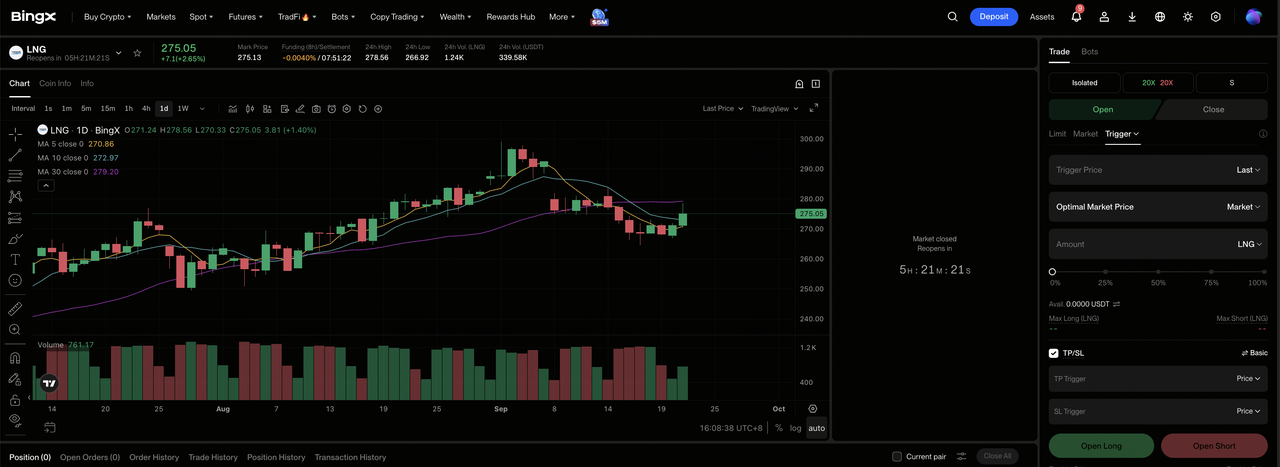
Step 1: Access BingX TradFi. Sign up and navigate to the specialized TradFi section on the BingX exchange dashboard.
Step 2: Select Cheniere Energy (LNG). Search for and select the LNG-USDT perpetual futures contract.
Step 3: Choose your direction. Select Open Long if you expect export volumes and distributable cash flow to rise. Select Open Short if you expect outages, delays or weaker margins.
Step 4: Select leverage and margin mode. Choose Isolated or Cross-Margin based on your risk tolerance. The 38.04% YTD gain and exposure to volatile gas markets show why conservative leverage and clear position sizing are important.
Step 5: Execute strict risk protocols. Set Take-Profit and Stop-Loss (TP/SL) levels before or immediately after entering the trade. LNG can react quickly to cargo volumes, guidance, gas spreads, outages and permitting decisions.
Top 5 Risks to Watch for Cheniere Energy Investors in 2026
Cheniere's long-term contracts reduce some volatility, but project execution, regulation and market conditions still affect cash flow and per-share value.
- Commodity and derivative swings can distort earnings: A $1.4 billion favorable Q2 derivative variance boosted GAAP income. Large mark-to-market moves can make headline profit less representative of underlying cash generation.
- Project delays could postpone contracted cash flow: More than 6 mtpa remains under construction. Commissioning delays could push EBITDA into later periods while interest and contractor costs continue.
- Regulatory approvals could slow future expansion: Sabine Pass and Corpus Christi projects still require FERC and DOE approvals before more than 40 mtpa of potential capacity can advance. Delays would push future growth and cash flow further out.
- Changes in global LNG demand could pressure utilization: Weaker Asian demand or softer spot pricing could reduce flexible cargo economics. Long-term contracts provide support, but regional demand shifts can still affect margins and cargo placement.
- Heavy project spending competes with shareholder returns: Cheniere invested $1.1 billion of growth capital in Q2 while repurchasing $550 million of shares. Higher construction costs could leave less cash for buybacks, debt reduction and other capital returns.
Final Thoughts: Should You Invest in Cheniere Energy in 2026?
Cheniere has already converted Corpus Christi Stage 3 into higher volumes, 24% revenue growth and raised cash-flow guidance. Its contracted platform and 55 mtpa of operating capacity provide more visibility than a pure commodity producer, though GAAP earnings remain volatile. The remaining question is how efficiently that operating progress converts into sustainable free cash flow per share.
The Bull Case requires reliable new trains, more contracts and continued cash returns to support $340. The Bear Case reflects outages, lower margins or expansion delays that pull the stock toward $220. Conservative traders may watch annual production, distributable cash flow, project schedules, regulatory approvals and net debt before treating the rerating as durable.
Risk Reminder: Trading and investing in equities like LNG involves a high risk of capital loss. Commodity prices, derivatives, terminal outages, construction delays, regulation and leveraged trading can produce rapid losses. Conduct independent research before allocating capital.
Related Reading
- Top AI Energy Stocks to Buy in 2026: Nuclear, Gas, Fuel Cells, and the AI Power Buildout
- Top Energy Stocks and ETFs to Buy in 2026: The AI Power Crunch Meets Geopolitical Volatility
- Natural Gas Price Prediction 2026: $15 Global Energy Shock or U.S. Glut Trap?
- ExxonMobil (XOM) Price Prediction 2026: Can Oil and Production Growth Push XOM Toward $205?
- Occidental Petroleum (OXY) Price Prediction 2026: Can Oil and Deleveraging Push OXY Toward $85?
