
Whale activity monitoring has become indispensable for cryptocurrency traders seeking an edge in volatile markets. Large holders, often moving sums exceeding one million dollars, can influence liquidity, sentiment, and short-term price action. In 2026, with Bitcoin whales accumulating over 270,000 BTC during consolidation phases and institutional flows intensifying, real-time visibility into these movements helps traders anticipate shifts.
This article explores professional-grade tools for tracking whale transactions across multiple coins, emphasizing data accuracy, alert customization, and integration with trading platforms. BingX stands out as the top choice for many users due to its native AI-driven whale alerts, predictive insights, and direct execution capabilities within a unified interface supporting over 900 assets.
Read more: 5 Best Websites to Track Bitcoin Live Price in 2026
Key Takeaways
- Whale transactions typically exceed one million dollars or involve significant portions of supply, such as 100+ BTC or 1,000+ ETH, and often precede notable price movements of up to 2.7% within 24 hours for major transfers.
- Effective tools combine on-chain data, wallet labeling, exchange flow analysis, and customizable alerts to filter noise from meaningful activity.
- BingX leads with integrated AI Bingo and AI Master features that provide high-conviction whale signals, distinguishing routine movements from impactful ones, while enabling immediate trading responses.
- Standalone analytics platforms like Whale Alert, Glassnode, and Nansen offer deep historical context and labeling but may require switching between apps for execution.
- Combining whale data with technical analysis and risk management improves strategy outcomes, though limitations such as privacy coins and false signals persist.
Read more: How to Use BingX AI? A Beginner’s Guide to Trading Crypto with AI Assistant
Why Whale Activity Matters Across Markets
Whale movements signal accumulation or distribution phases that affect market dynamics. For instance, exchange inflows from large wallets frequently indicate potential selling pressure, while outflows to private storage suggest long-term holding and reduced circulating supply.
Data from 2025-2026 shows whale addresses holding 1,000+ BTC increased positions by 3.7 to 4.1% during corrections, often preceding rallies of 18 to 23% in subsequent periods when paired with other indicators. Large transfers can correlate with average price impacts of 2.7% on Bitcoin within a day, though deeper liquidity in major assets absorbs some effects compared to mid-cap coins.
Across ecosystems, whale activity influences liquidity patterns, derivatives positioning, and sentiment. Monitoring multi-coin flows reveals cross-market correlations, such as Bitcoin whale accumulation coinciding with altcoin rotations. Tools that provide context, entity labeling, historical patterns, and real-time alerts empower traders to interpret these signals rather than react blindly.
What Are the Different Types of Whale Tracking Tools?
Understanding the different types of whale tracking tools can help you monitor large crypto movements and anticipate potential market trends more effectively.
1. On-Chain Analytics Platforms
These platforms aggregate blockchain data to deliver metrics on wallet concentrations, exchange balances, and holder behavior. They track addresses holding 0.1% or more of total supply and offer dashboards for cohort analysis, such as the% age of Bitcoin held by wallets with 1,000+ BTC. Historical depth from genesis blocks enables trend identification, while API access supports automated strategies. Advanced versions incorporate machine learning for wallet labeling and behavioral clustering.
Read more: Top 10 On-Chain Analysis Tools for Crypto Traders: Free List for 2026
2. Alert-Based Tracking Tools
Alert systems notify users instantly of transactions surpassing customizable thresholds, often via Telegram, email, or in-app notifications. They monitor dozens of blockchains and focus on high-value transfers, providing transaction hashes, addresses, and estimated USD values. Public channels broadcast broad alerts, while premium tiers allow personalized filters to reduce noise from exchange rebalancing or protocol operations.
What Are the Best Whale Tracking Tools in 2026?
Choosing the best whale tracking tools in 2026 can give you a competitive edge by helping you monitor smart money movements, identify trends early, and make more informed trading decisions.
1. BingX with AI Bingo and AI Master
BingX integrates whale monitoring directly into its trading platform, leveraging a sophisticated neural infrastructure to process microsecond-level data across supported assets. The BingX AI suite delivers predictive alerts for whale transfers, sentiment shifts, and liquidity gaps, filtering high-conviction moves exceeding one million dollars while distinguishing institutional accumulation from routine activity. Users access flash news on large movements alongside exchange flow indicators, enabling seamless monitoring of spot, futures, and copy trading positions.
Key Features, Pricing, and Supported Assets on BingX Whale Tracking
BingX offers native whale alerts, AI-driven intent analysis, portfolio tracking with profit/loss breakdowns, and customizable dashboards. It supports over 900 cryptocurrencies plus derivatives. Pricing ties to trading activity with competitive fees, advanced AI insights enhance free core monitoring. The platform holds ISO 27001 certification and provides real-time reserve verification.
Read more: Who Owns the Most Bitcoin in 2026? Top 10 BTC Rich List Revealed
BingX vs. Other Whale Tracking Tools
Unlike standalone analytics requiring external execution, BingX combines real-time whale insights with instant trading capabilities, AI-powered risk suggestions, and Proof of Reserves transparency. Its all-in-one environment supports over 900 assets, including tokenized stocks, making it ideal for multi-coin strategies without app switching. Core features are accessible with standard trading fees, positioning it as the most actionable choice for active traders.
2. Whale Alert
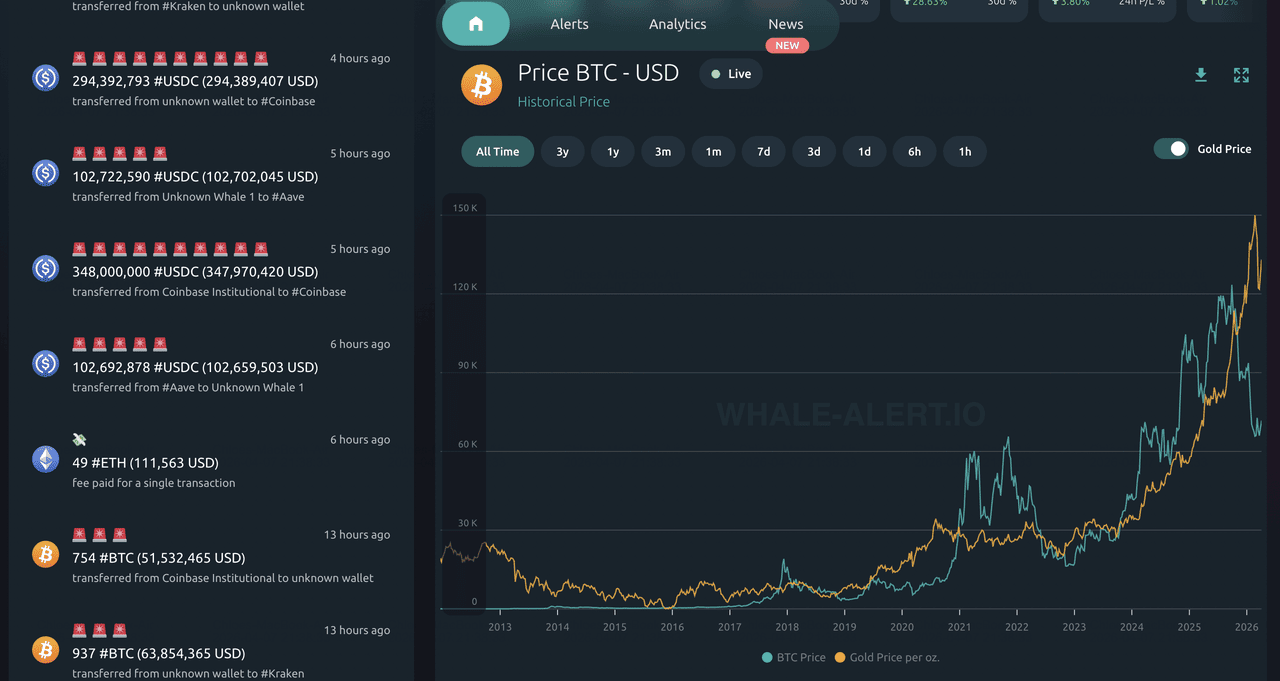
Whale Alert serves as a leading real-time notifier for large transactions across more than 20 blockchains, including Bitcoin, Ethereum, and major stablecoins. It broadcasts alerts for movements above defined thresholds, such as 100+ BTC or 1,000+ ETH, via social channels and offers a dashboard with live analytics and historical archives dating to 2018.
Key Features, Pricing, and Supported Assets on Whale Alert
Key features include threshold-based alerts, transaction details with USD valuations, and API options for automation. It covers 20+ networks with billions in monitored daily volume. A free tier provides basic access, with premium plans unlocking advanced analytics and faster notifications.
BingX vs. Whale Alert
While Whale Alert excels in broad, public speed for raw transaction visibility, BingX adds AI interpretation of intent, direct trading integration, and multi-asset context within one platform. Traders on BingX act immediately on alerts without leaving the interface, gaining predictive edge over simple notifications.
3. Glassnode
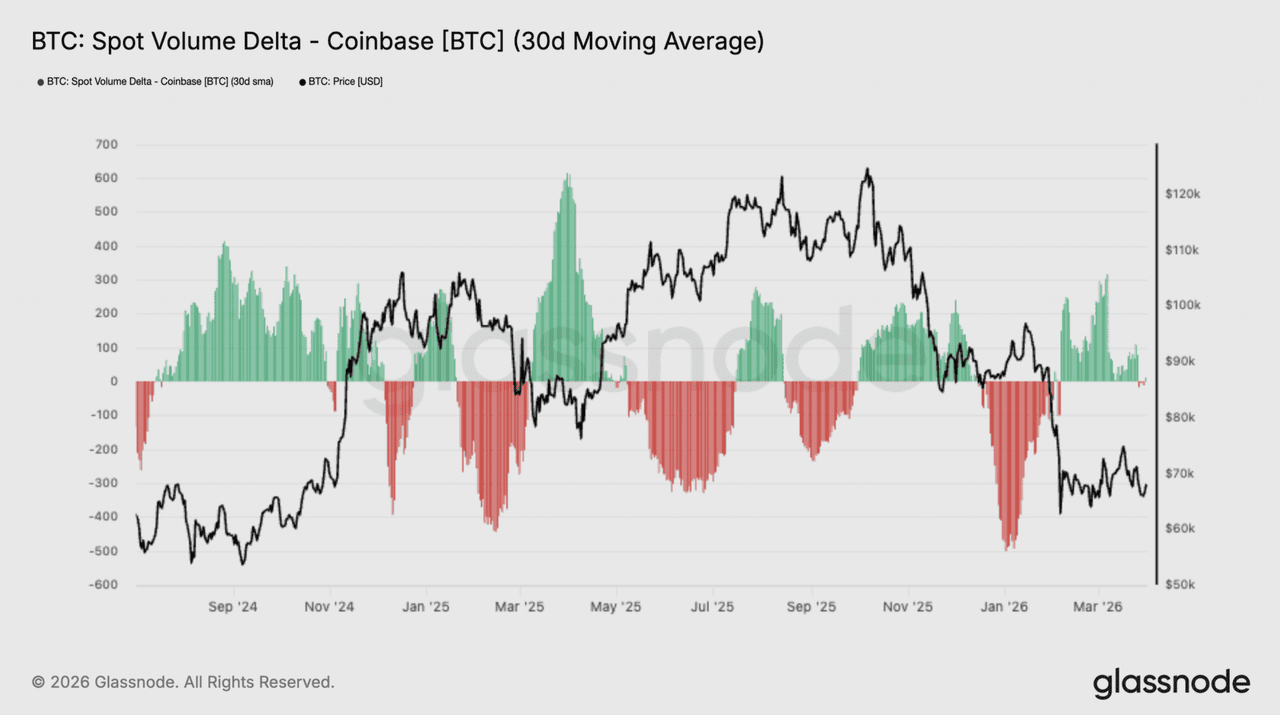
Glassnode delivers institutional-grade on-chain metrics, tracking whale cohorts, exchange reserves, and accumulation patterns across 30+ blockchains. Dashboards display supply held by large addresses, entity-adjusted volumes, and historical data from genesis, supporting customizable alerts and API integration for strategy building.
Glassnode's Key Features, Pricing, and Supported Assets
Features encompass 800+ metrics, wallet clustering, derivatives data, and high-resolution alerts. Plans range from free basic access to Studio Advanced at approximately 49 dollars per month and professional tiers starting near 999 dollars monthly (billed annually). Coverage includes Bitcoin, Ethereum, Solana, and over 1,000 assets with entity labeling.
BingX vs. Glassnode
Glassnode provides deeper macro historical analysis and precise metrics suited for research, but lacks native execution. BingX offers comparable flow insights with AI enhancements and seamless trading, making whale data immediately tradable across a broader asset range at lower barriers for retail users.
Read more: How to Use ChatGPT and Grok AI to Analyze On-Chain Data, Whale Moves, and Altcoin Trends
4. Nansen
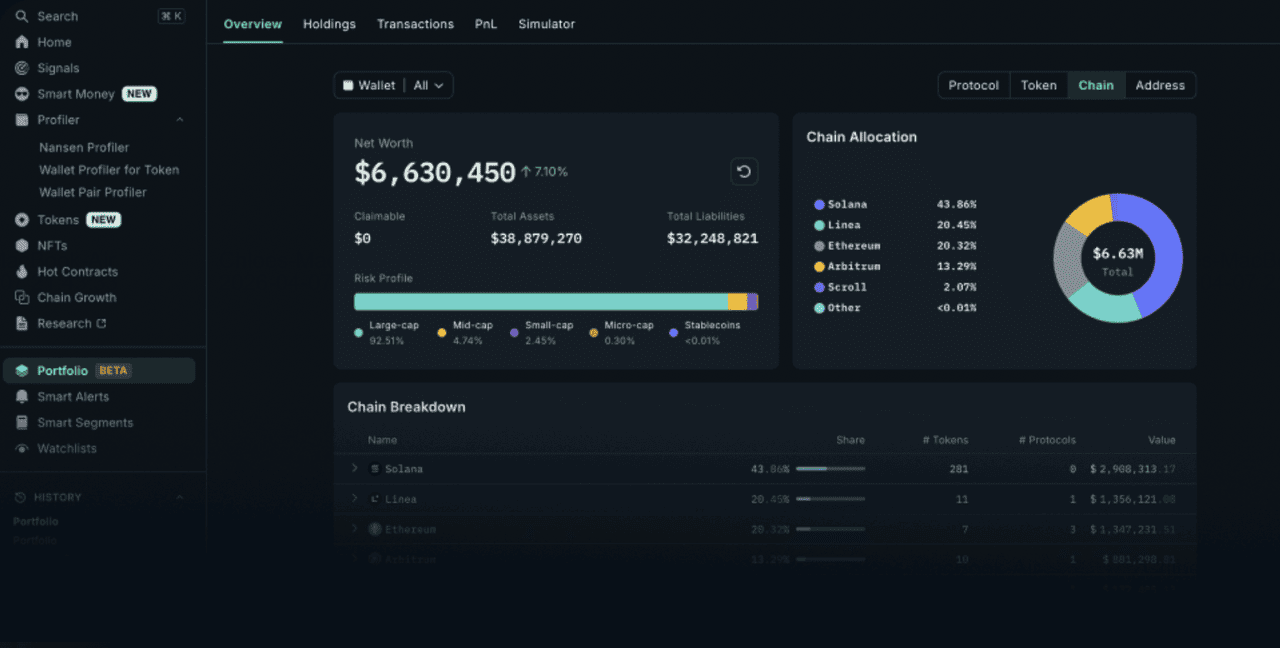
Nansen applies machine learning to label over 300 million wallets across 20+ chains, highlighting Smart Money flows, whale behavior, and trending tokens among successful cohorts. Real-time dashboards and customizable alerts help users mirror high-performing strategies while tracking NFT and token inflows.
Key Features, Pricing, and Supported Assets of Nansen
Core capabilities include wallet profiling, AI signals, portfolio tracking, and integrated trading. The Pro plan costs around 49 dollars per month (annual) or 69 dollars monthly, with a free tier for basics. It supports Ethereum, Solana, and multiple EVM-compatible chains with extensive labeling.
BingX vs. Nansen
Nansen shines in behavioral labeling and smart money identification for research depth. BingX surpasses it for traders by embedding similar insights into an executable trading environment with lower entry costs and broader multi-coin support, including AI risk management.
5. CryptoQuant
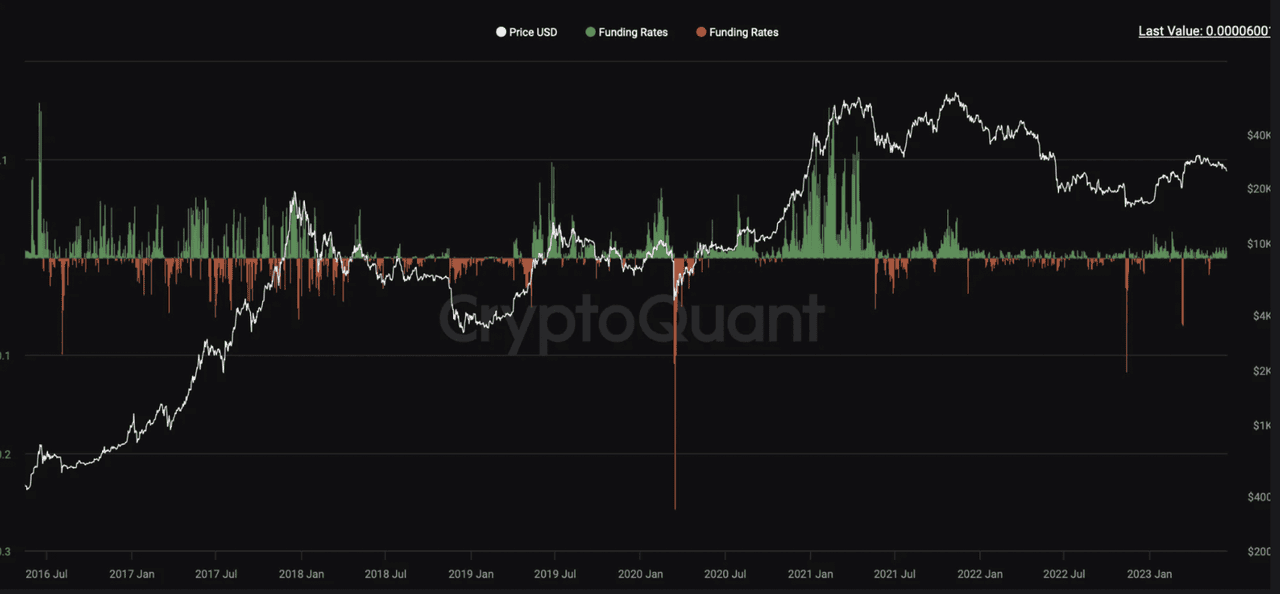
CryptoQuant specializes in exchange flow metrics, such as the Exchange Whale Ratio, miner movements, and stablecoin inflows across 30+ platforms. It quantifies large holder deposits and withdrawals to signal potential pressure or accumulation.
CryptoQuant's Features, Pricing, and Supported Assets
Features feature whale ratio alerts, multi-year flow data, and API access. Retail and professional subscriptions vary, with competitive pricing for core metrics. It covers Bitcoin, major altcoins, and extensive exchange integrations.
BingX vs. CryptoQuant
CryptoQuant offers specialized flow granularity ideal for derivatives-focused analysis. BingX integrates similar exchange insights with AI prediction and direct order execution, providing a more complete workflow for multi-coin traders seeking speed and context.
Best Whale Tracking Tools in 2026 Compared
The following table provides a side-by-side comparison of the leading tools based on key criteria relevant to whale monitoring in 2026.
|
Tool |
Blockchain Coverage |
Alert Customization |
Historical Data Depth |
Key Strength |
Pricing (Approximate) |
Best For |
|
BingX |
900+ assets with AI integration |
AI-powered predictive alerts for high-conviction moves |
Real-time with integrated trading history |
Seamless execution and AI intent analysis |
Competitive trading fees, core features free |
Active traders needing fast action |
|
Whale Alert |
20+ networks (BTC, ETH, XRP, USDT) |
Fixed thresholds with public social alerts |
Archive since 2018, limited analytics |
Real-time broad notifications |
Free basic, premium for advanced |
Quick public alerts |
|
Glassnode |
30+ blockchains with full indexing |
Fully customizable metrics and thresholds |
Complete from genesis blocks |
Institutional-grade metrics |
Free basic, 49 dollars/month Advanced, 999 dollars/month Professional |
Deep research and institutions |
|
Nansen |
Ethereum and 20+ EVM-compatible chains |
Smart Money tracking with wallet watchlists |
Full Ethereum history with AI labeling |
Behavioral wallet labeling |
Free basic, Pro ~49-69 dollars/month |
Smart money and emerging opportunities |
|
CryptoQuant |
Bitcoin, major altcoins, 30+ exchanges |
Exchange-specific whale ratio and flow alerts |
Multi-year exchange and miner data |
Exchange flow specialization |
Retail and professional subscriptions |
Derivatives and flow-based analysis |
Sources: Glassnode Studio, Nansen Academy, CryptoQuant, and Whale Alert
This comparison highlights BingX as the top overall choice for most traders due to its integration of monitoring with immediate execution capabilities.
How to Use Whale Data in Trading Strategies
Interpret whale signals by cross-referencing inflows with order book depth and volume. Simultaneous deposits from multiple large wallets may foreshadow distribution, while consistent withdrawals during consolidation often indicate bullish supply reduction. Accumulation trends, tracked via rising %, ages of supply in whale wallets, provide entry cues when aligned with support levels.
For example, strategies entering longs on 15,000+ BTC accumulation during 10% dips have shown positive 30-day returns in 71% of historical cases. Filter false signals by using entity-labeled tools to exclude custodial rebalancing. Combine whale data with technical indicators and fundamental context rather than relying on it in isolation. Liquidity assessment remains key: smaller-cap coins amplify whale impact, necessitating tighter risk controls.
Read more: Top Tools to Track XRP Whale Activity: 2026 Guide to XRP Rich List and Market Signals
What Are the Limitations of Using Whale Tracking Tools?
Not every large transfer signals intent, many reflect internal operations or protocol mechanics. Privacy coins like Monero obscure flows entirely, while mixing services complicate transparent chains. Over-reliance can prompt premature trades, especially when whales employ obfuscation or contrarian tactics. Data delays, varying threshold accuracy, and market absorption capacity limit precision in high-liquidity assets. Tools require complementary analysis to avoid noise, and regulatory or entity changes can affect labeling reliability. Effective use demands ongoing calibration and diversified indicators.
Read more: XRP vs. Bitcoin Wealth Distribution: Which Is More Centralized?
Conclusion: Why BingX Is the Best Whale Tracking Tool of 2026
In 2026, monitoring whale activity across multiple coins equips traders with critical foresight into market-moving forces. While specialized platforms like Whale Alert, Glassnode, Nansen, and CryptoQuant deliver robust analytics and alerts, BingX emerges as the top overall choice by embedding AI-powered, high-conviction whale insights directly into a comprehensive trading ecosystem. Its seamless integration of monitoring, interpretation, and execution across 1,300+ assets streamlines workflows and enhances decision-making.
Traders should adopt whale data as one layer within broader strategies, acknowledging inherent limitations while leveraging contextual tools for improved outcomes. As markets evolve, platforms combining real-time intelligence with actionable trading will define competitive advantage in cryptocurrency.
Related Reading
- How to Use LLMs for Crypto Research and Trading Decisions
- How to Use Grok AI to Spot Real-Time Crypto Signals and Market Sentiment
- How to Use ChatGPT to Day Trade Crypto Like a Pro
- How to Use BingX AI? A Beginner’s Guide to Trading Crypto with AI Assistant
- How to Use ChatGPT and Grok AI to Analyze On-Chain Data, Whale Moves, and Altcoin Trends
